Root Canal Treatment

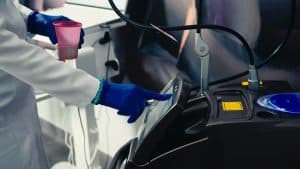
Root canal treatment using a dental laser. FREE consultation!

Save your teeth for a natural smile!

Your teeth can last a lifetime if you take care of your oral hygiene and have routine visits to the dentist. Sometimes, your teeth can get an infection. When disease or injury to the dental pulp occurs, an appointment with an endodontist may be necessary.

What is endodontic therapy?

Endodontics is the branch of dentistry concerned with the dental pulp and the tissues surrounding the roots of a tooth. Infection within the pulp can spread to the tissues around the tooth's root, which can cause inflammation and pain. In some cases, there may be no pain, but bacteria from the infection can also damage the jawbone that supports the teeth.

Endodontic therapy, or root canal treatment, treats the soft pulp tissue inside the tooth to eliminate bacteria from an infected canal. Without root canal treatment, the damage can be irreversible, potentially leading to tooth loss. After the infected pulp is carefully removed and properly cleaned, the tooth is filled and sealed. Complicated or high-risk cases may be referred to an endodontist. Often, your general dentist can also perform root canal treatment.

When is therapy needed?

Pulpita poate avea mai multe cauze – afecțiune cauzată de infecția sau inflamația pulpei, care este țesutul moale din interiorul dintelui, format din vase de sânge și nervi. Straturile de smalț și dentină protejează pulpa. Atunci când aceste straturi sunt deteriorate, bacteriile pătrund în pulpă provocând durere, inflamație și alte probleme dentare.

These protective layers can be compromised by several conditions, including:

  • Dental caries
  • Tooth injuries, such as a cracked or chipped tooth
  • Old dental problems, such as jaw misalignment or teeth grinding

SYMPTOMS OF PULPITIS:

  • Inflammation
  • Pain when chewing
  • Sensitivity to cold or hot foods/drinks
  • Gingival abscess (a pocket of pus that forms in the gums)

Benefits

MORE COMFORTABLE

Waterlase dentistry is a gentler, faster, and more effective alternative to traditional endodontic therapy. Reaching deep into the dentinal tubules, Waterlase uses laser energy and a gentle water spray to clean and kill bacteria (up to 96%), reducing the use of harsh chemicals and offering a more holistic approach.

FASTER TREATMENT

Laser light penetrates deep into the dentinal tubules to kill bacteria, reducing the need for medicated irrigations. Waterlase achieves a significant reduction in bacterial count in just three minutes, compared to 20-30 minutes for conventional treatment.

Faster recovery

Waterlase dentistry is minimally invasive, with greater efficacy and more promising long-term results, helping to reduce the risk of retreatment. Patients treated with Waterlase usually recover faster and report less pain.

Dental pain can occur due to inflammation or bacteria in the dental pulp. Certain thermal (cold, hot), chemical (sweet), or masticatory stimuli can cause the patient to perceive discomfort, pain, or, in the worst-case scenario, inflammation of the affected area.

For a correct diagnosis, the patient needs to present themselves at the dental clinic, where, following a complete clinical and radiological examination, their appropriate treatment plan will be drawn up.

Microscope-assisted endodontic treatment represents the most complex work procedure used in modern endodontics.

This is followed by dental dam isolation of the tooth, which is very comfortable for the patient and allows the dentist to work on a tooth uncontaminated by saliva bacteria.

During root canal treatment, the inflamed or infected pulp is removed using special files and thorough irrigation with antiseptic solutions, carefully cleaning and disinfecting the tooth.

After pulp removal, the root canals will be sterilized using a dental laser, which will disinfect and three-dimensionally (360) cleanse the canal walls, something that is impossible to achieve with conventional methods.

Lasers achieve a very good rate of bacteria elimination from the endodontic space, especially from less accessible areas such as lateral and accessory canals.  

The laser is activated by attaching a special tip designed for the root canal space. It is set to a standard parameter so that it uniformly emits a light beam coordinated by the fine and precise circular movements of the dentist. This beam has the role of specifically acting on the protein in the respective bacterium, destroying it.

The obturation phase, during which the canal is filled and sealed with a rubber-like material called gutta-percha, provides a specific three-dimensional seal that stops other microorganisms from infiltrating the endodontic space.

After root canal treatment, it is recommended that the patient undergo a follow-up X-ray, which should be repeated at 6 months, 1 year, and 2 years for effective monitoring of the treatment. 

Then, the tooth is restored with a cover crown or a definitive filling for protection and recovery of function in the arch.

Thus, modern endodontic treatment performed correctly with the help of laser technology and microscopic magnification can offer a long life to the tooth on the dental arch.

Top 10 Frequently Asked Questions from Patients Seeking Endodontic Treatment (Molars, Canals) with Laser

It is a minimally invasive procedure performed using a microscope and a laser, which cleans and disinfects the root canals more effectively and safely than the traditional method.

The microscope offers 25× magnification for perfect visibility of the canals, and the laser sterilizes and deeply cleans areas inaccessible to mechanical instruments or traditional irrigation.

Well, the procedure is usually painless – local anesthetic is administered, and many patients say it's much more comfortable than traditional root canal treatment.

As a rule, 1 session — laser and modern technology allow solving even complex cases in a single visit.

✔️ Deep disinfection (up to 99.91% of bacteria eliminated)
High precision without affecting healthy tissue
Fast healing and reduced discomfort
No chemicals (hypochlorite) used

Yes – but the combination laser + microscope spores success of treatment and I reduce the risk of retreatment.

In extremely complex cases (very narrow or curved canals), the laser does not completely replace traditional instruments – it is just a very helpful supplement.

A visit lasts between 45–60 minutes, depending on the number of canals and the complexity of the case.

a consultation, eventually with X-rays, and the tooth is anesthetized. It is placed dental splint (NicTone), an isolation barrier, for maximum sterility.

Healing is fast – often without pain and with a quick return to normal activities. Follow-up appointments every few months are recommended.

✅ Conclusion

Endodontic treatment with microscope and laser, offered by Innovation Medical (Bucharest), it's an advanced option for treating dental infections: it's precise, comfortable, and leads to rapid healing. The technology allows for deep bacteria elimination, reduces the number of sessions, and minimizes the risk of complications.

Read these articles recommended by the Innovation Medical team

IMC rating
Innovation Medical Center place picture
4.8
Based on 133 reviews
Innovation Medical Center
Privacy Overview

This website uses cookies so that we can provide you with the best user experience possible. Cookie information is stored in your browser and performs functions such as recognising you when you return to our website and helping our team to understand which sections of the website you find most interesting and useful.