
1. Insulation
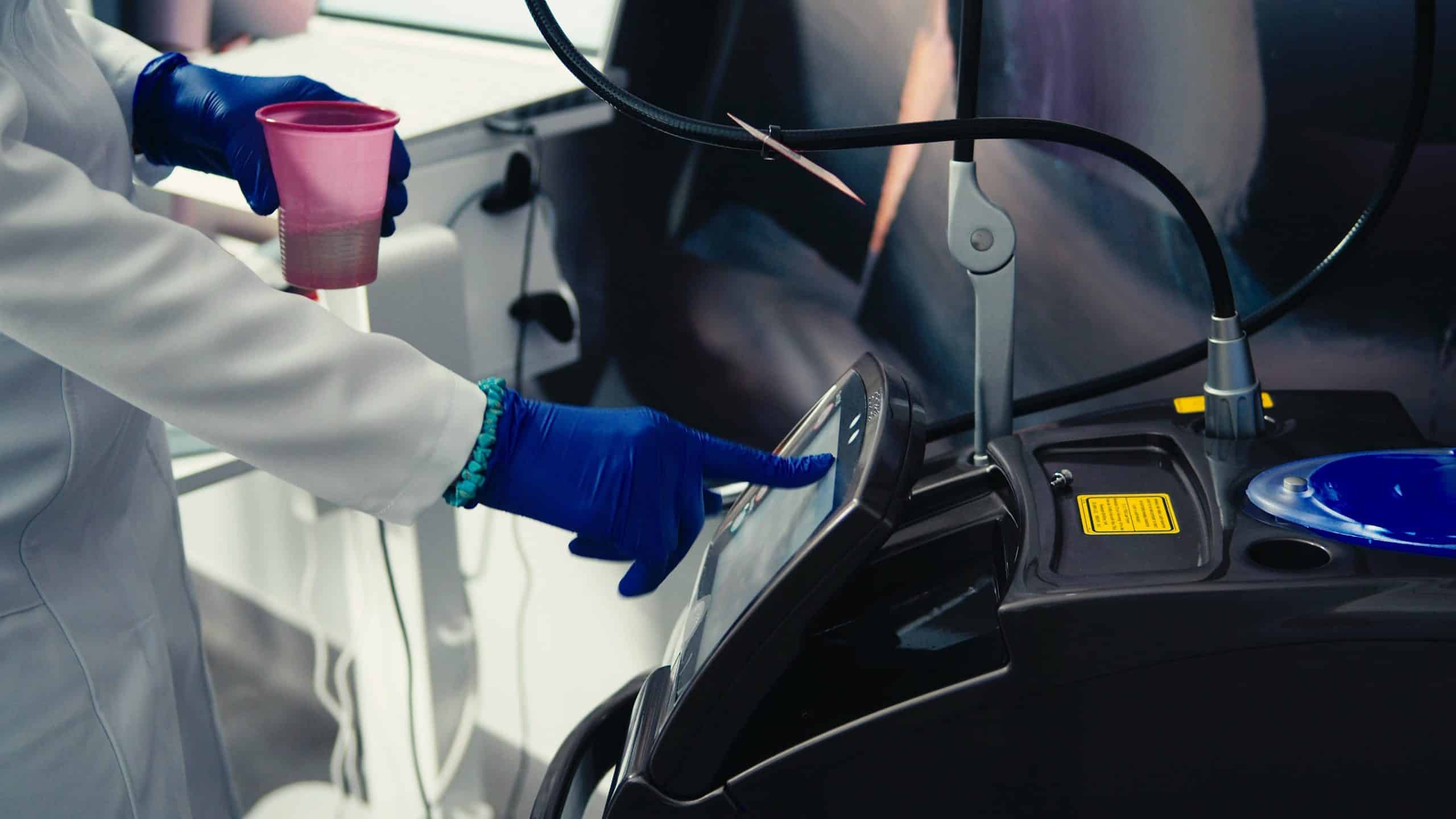
Modern endodontics is performed with isolation, lasers, and magnification. If we do not use isolation, we cannot speak of actual endodontics, as the inside of the tooth is contaminated with blood and saliva from the oral cavity, which harbors the most complex bacterial flora in the human body.
Isolation is achieved with a rubber dam – a thin latex sheet secured to the treated tooth with a clamp, to completely separate it from the rest of the oral cavity. Thus, we work in optimal conditions of sterility and control, in a regimen similar to surgery.
Innovation Medical Center offers laser endodontic treatments, with technology at the 2026 level, making it a leader in Romania in laser dentistry. Innovation Medical Center is an associated center and European partner of Sigmund Freud University Vienna and AALZ Germany, being affiliated with ISLD, which guarantees clinical practices aligned with international academic and scientific standards in laser dentistry and TMJ therapy.
Magnification
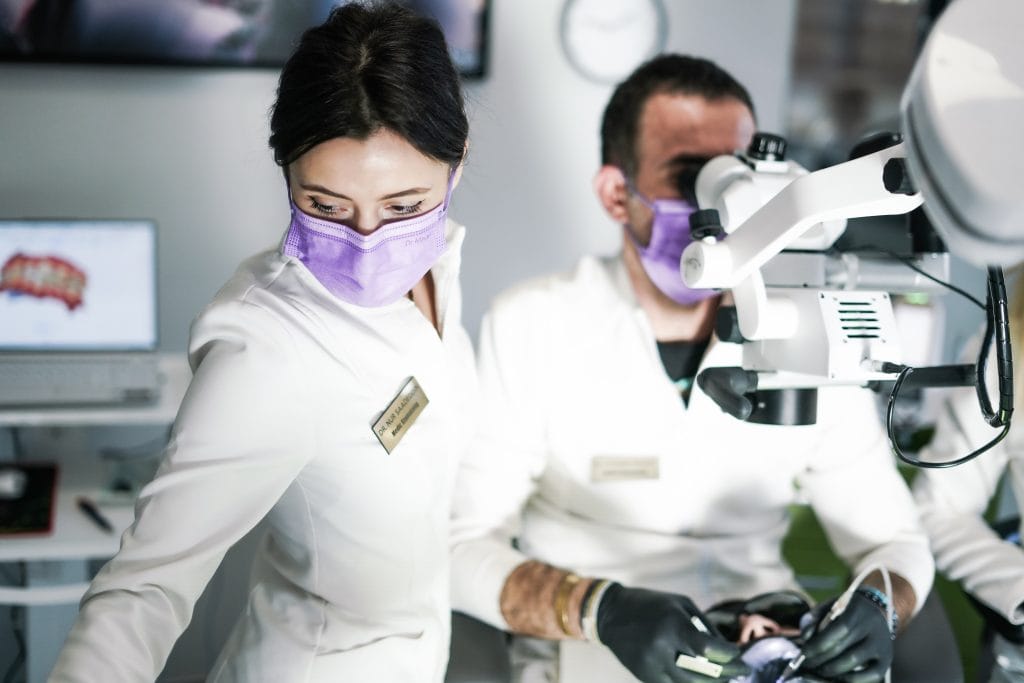
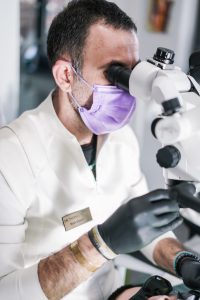
The second essential element is microscope.We are working in the smallest cavity in the human body, and for correct treatment, it is essential to clearly see the internal structures. Endodontic anatomy is complex, with numerous morphological variations and collateral canals.
If these channels are not visible, they cannot be treated, which frequently leads to failures.
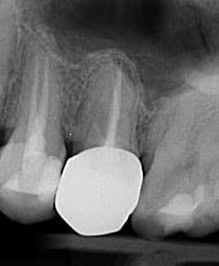
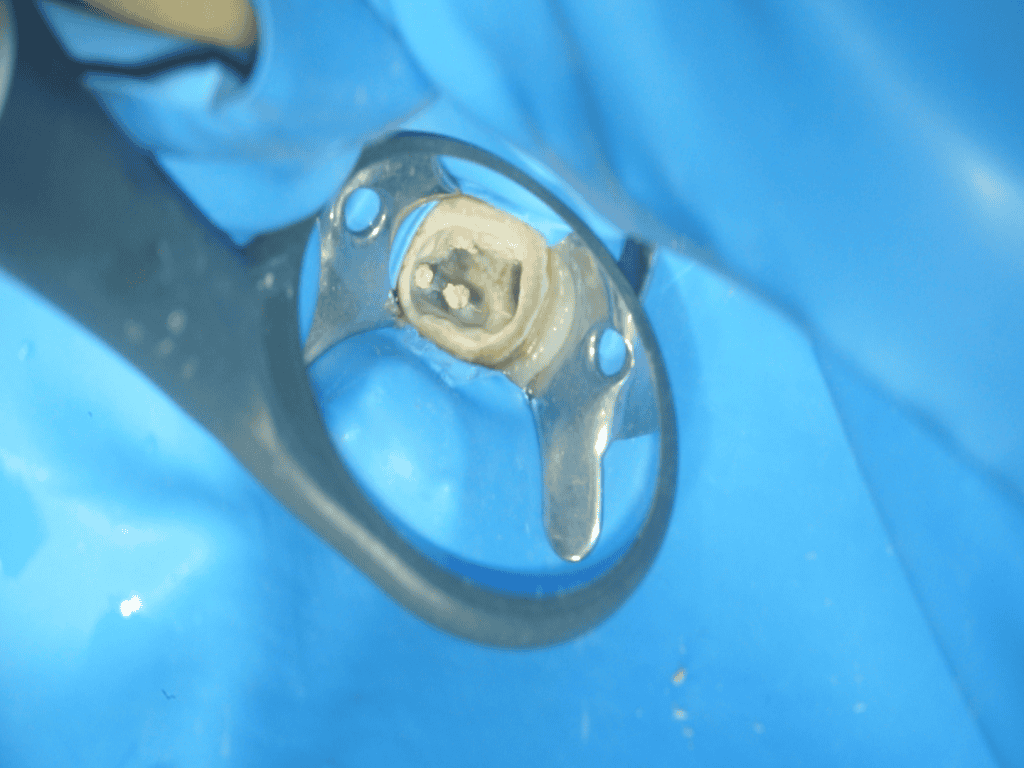
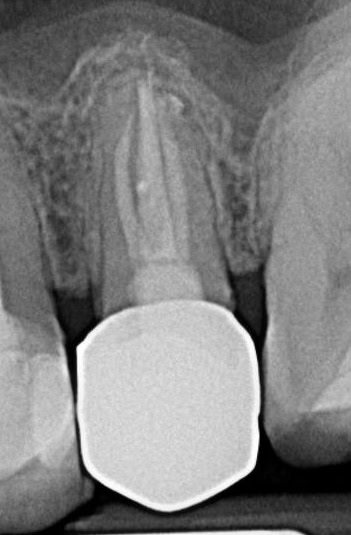
Example: A premolar two upper - usually with a single canal - was treated twice unsuccessfully. Under the microscope, it was identified Three channels, explaining recurrence. The postoperative X-ray shows complete three-dimensional obturation of all canals and the presence of white dots in the apical third of the root, corresponding to collateral canals that were correctly treated and obturated.
3. The laser
The third element – and probably the biggest revolution in endodontics modern - it is the laser.In endodontics, two wavelengths are primarily used: Erbium and diode laser.
Erbium laser
The Erbium laser has a wavelength that is simultaneously absorbed in hydroxyapatite and water.It emits extremely short and intense pulses, which generate the phenomenon of cavitation, producing negative pressure inside the tooth.
This pressure helps to draining of main and collateral channels more efficient than any classical method. At the moment of impact, a shock wave, which breaks down the bacterial biofilm and causes the collapse of infected cells.
Biofilm is one of the biggest challenges in endodontics, being a layered matrix of bacteria resistant to chemical agents. In conventional endodontics, sodium hypochlorite It eliminates only the bacteria it comes into contact with. By using the Erbium laser, the biofilm is completely dislodged and eliminated, facilitating the destruction of bacteria from within.
At the same time, absorption into the water molecule leads to Explosive evaporation of this, releasing OH radicals, with a strong bactericidal effect.
b. Diode laser
After using Erbium, it is used diode laser, whose wavelength is absorbed in melanin pigment present in the cell membranes of many bacteria.
Through irradiation, intracellular temperature rises rapidly, causing Bacterial lysis and destruction.The result is a Superior disinfection compared to conventional methods.
An additional advantage of the laser is selectivityenergy is absorbed specifically by melanin, but it can penetrates dentin up to 1 cm, allowing the destruction of bacteria in mechanically inaccessible areas – including in Dentin tubules.
Dentin tubules, microscopic components of dentin structure, can harbor deeply infiltrated bacteria. In classic endodontics, sodium hypochlorite penetration is limited to approximately 0.3 mm, while deep infections can exceed 1 mm.
Diode lasers, by absorbing melanin, can Destroys bacteria effectively up to 1 mm deep, significantly increasing the chances of therapeutic success.
A particularly resistant bacterium is Enterococcus faecalis, difficult to eliminate with hypochlorite. Although it has low melanin content, the combined effect of Thermal shock and pressure wave Erbium allows its destruction.
4. Clinical cases
Case 1 - Upper premolar with three canals
The upper second premolar, which had previously been treated twice without isolation, a microscope, or a laser, relapsed. Thanks to microscopic examination, three root canals were discovered, a rarity (incidence 0.5–11%). The postoperative radiograph shows complete three-dimensional obturation, including the lateral canals, performed using an Erbium laser, which ensured thorough cleaning of the endodontic system.
Case 2 – Lower molar with six canals
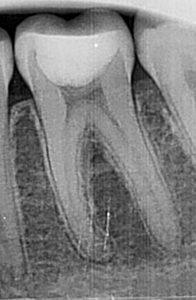
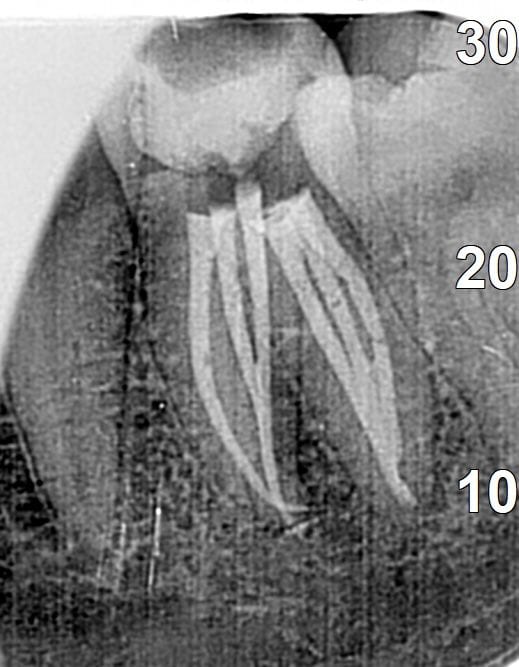
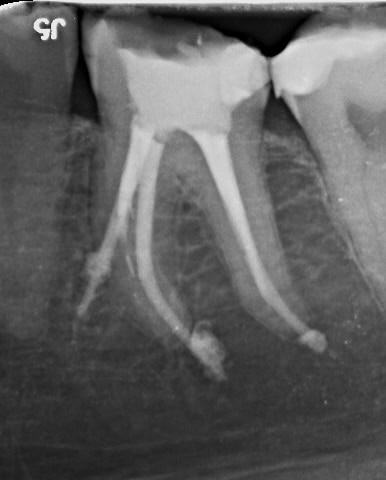
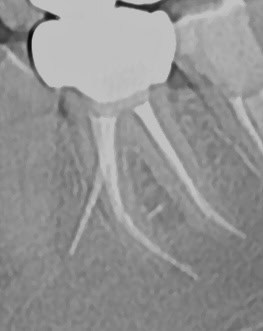
A lower first molar that appeared radiographically standard was found, under the microscope, to have six canals, an extremely rare case. Without magnification, these canals could not have been detected, which would have very likely led to recurrence.
Case 3 - Mandibular molar with perforation and over-instrumentation
The case presented a perforation and an overextended gutta-percha cone, which would normally have required surgery. Due to proper isolation with Nic Tone rubber dam and the use of two lasers, disinfection was superior, the area did not become infected, and the overextended cone appeared perfectly integrated on the radiograph taken 18 months postoperatively.
Case 4 – Upper molar with roots in the maxillary sinus
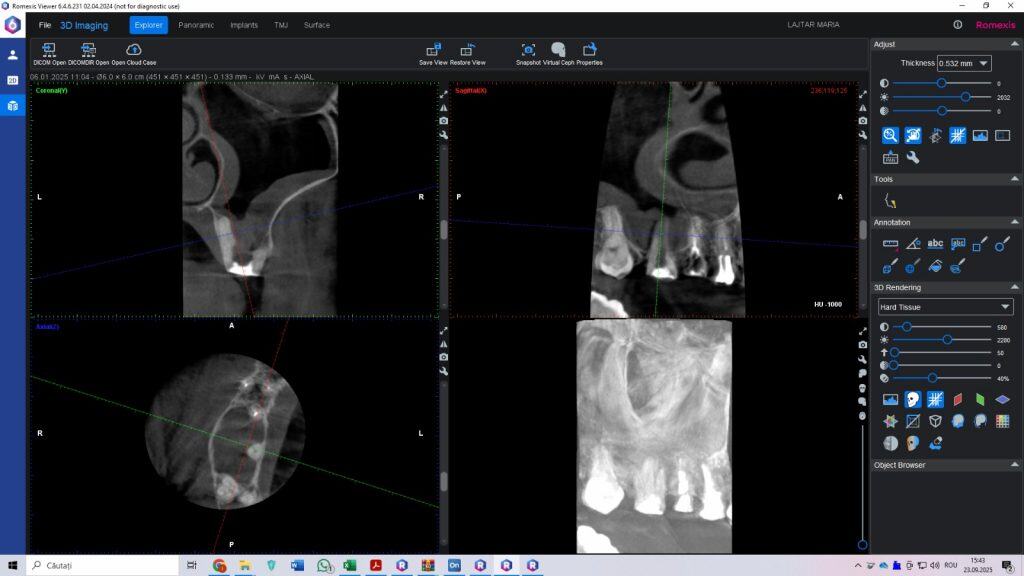
A maxillary molar with roots in the maxillary sinus was accidentally perforated by another doctor during the initial procedure (without a microscope), creating a direct communication with the sinus. In conventional endodontics, this case would have been considered untreatable, as working with sodium hypochlorite in the sinus is impossible. The classic alternative would have been extraction, sinus lift, and implant – a complex and lengthy procedure.
In our clinic, the laser has allowed saving the tooth, as only water and light were used, without irritants for the sinuses. The perforation was closed with a biocompatible and bactericidal cement, and the tooth was restored prosthetically. At The 9-month control CT scan, the maxillary sinus appears completely clear and healed.

Frequently Asked Questions About Modern Endodontic Treatments
To avoid contamination of the tooth with saliva or blood and to work in a completely sterile environment.
No. The laser is gentle, precise, and significantly reduces postoperative inflammation and pain.
Because it allows us to see hidden or very fine channels that would otherwise be impossible to treat.
Deeply cleans and disinfects canals, eliminating bacteria and biofilm.
It acts selectively only on bacteria and infected tissues, without affecting healthy structures.
Yes, in many cases, the laser allows us to save teeth that previously would have had to be extracted.
Usually one session.
Deeper disinfection, faster healing, reduced discomfort and risk of re-infection.
Yes, the technology allows application on all types of teeth, including those with difficult access or complex anatomy.
Just like a healthy natural tooth, if restored correctly and hygiene is maintained.
Index of Terms – Modern Endodontics
Biofilm – microscopic layer of bacteria organized in a protective matrix; it forms on the internal surfaces of tooth canals and is difficult to remove using conventional methods.
Biocompatible – a material or substance that is well-tolerated by the body, without causing adverse reactions.
Bactericide – an agent that destroys bacteria (as opposed to bacteriostatic, which merely inhibits them).
Dentin tubules – microchannels present in the dentin structure that connect the pulp chamber to the outside of the tooth; they can be pathways for bacteria.
Cavitation – a physical phenomenon produced by laser pulses in liquid (water), which generates vapor bubbles and negative pressure, facilitating the cleaning and disinfection of channels.
Dig – thin latex or similar material sheet, attached to the tooth with a clamp, to completely isolate it from the rest of the oral cavity during treatment.
Root Canal Treatment – a branch of dentistry that deals with the treatment of the inside of the tooth (pulp chamber and root canals).
Hydroxyapatite – natural mineral care constitutes the main component of enamel and dentin; absorbs Erbium laser energy.
Magnify technical term for the process of optical zoom through a microscope or magnifying glass, which allows the visualization of details invisible to the naked eye.
Prosthetic restoration – restoration of the endodontically treated tooth with a crown or other prosthetic element to restore its correct shape and function.
Author:
Dr. Thomas Mendel – Medic Dentist cu 20 Ani de experiență – Specializare în Microscopia Endodontics Laser – LSO (Laser Safety Officer) AALZ Aachen Germany, Master in Laser Dentistry Competence S.F.U. Vienna




















 Romanian
  English