
Neuro-Stomatology and TMJ / Temporomandibular Joint Dysfunction Center.
Interdisciplinary team of doctors with over 40 years of experience!
Partner in Romania of AALZ-Germany / Univ. SFU Vienna
Temporomandibular joint disordersTMJ) can have a significant impact on your daily life, causing bruxism, pain, and discomfort. Understanding these disorders is the first step toward effective management and treatment. The Innovation Medical Center center of excellence has created this page to provide you with comprehensive information about TMJ disorders, their symptoms, causes, and modern treatments available today in Romania.
What is the Temporomandibular Joint (TMJ)?
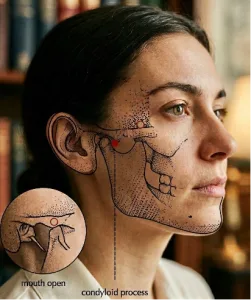
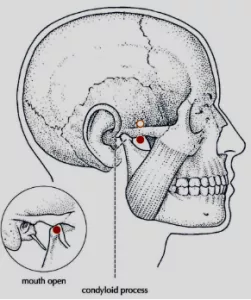
The temporomandibular joint (TMJ) is a hinge-type joint that connects the mandible to the temporal bones of the skull, located just in front of each ear. This joint allows you to move your jaw in all directions, up and down and side to side, enabling you to talk, chew. . ATM disorders can cause pain in the jaw area and in the muscles that control its movement.

Symptoms of Temporomandibular Joint (TMJ) Disorders
•Pain and/or tensionCan you feel Pain or tension in the joint area jaw, face, neck, or shoulders.
•Difficulty movingDifficulty or discomfort during chewing, speaking, or opening the mouth.
•Clicking sounds: Sunete de clic, ‘crăpături’ sau ‘trosnituri’ în articulație când deschizi sau închizi gura.
•Jaw lockingThe jaw can remain locked in an open or closed position.
•InflateSwelling on one side of the face.
•Headache Frequent headaches or migraines.

Causes of Temporomandibular Joint (TMJ) Disorders
•Lesions Mandible or head trauma.
•ArthritisTypes of arthritis, such as osteoarthritis or rheumatoid arthritis.
•Jaw alignmentLateral displacements or retrusions of the mandible, dental occlusion discrepancies.
• Prosthetic rehabilitationă total or partial without respecting the vertical dimension and a defective occlusal balance
•Teeth grindingChronic grinding or clenching of the teeth (bruxism).
•StressHigh levels of stress, which can lead to muscle tension.

Diagnosis of Temporomandibular Joint (TMJ) Disorders:
Diagnosis ATM disorders The Innovation Medical Center involves a comprehensive examination by an interdisciplinary team: a Maxillofacial Surgery Specialist, a Physical Medicine and Rehabilitation Specialist, an Orthodontics and Prosthodontics Dentist, a Physical Therapist, and a specialized orthodontic laboratory. Diagnostic protocols typically include a medical history of the patient's general health, followed by an evaluation of the teeth, masticatory muscles, joint, and surrounding painful areas. After the clinical examination, X-rays, TMJ ultrasounds, AI Thermography, and, if necessary, a computed tomography (CT) scan or MRI are prescribed.
At the center of excellence Innovation Medical Center evaluate the temporomandibular joint function by:
🔹 Detailed clinical evaluation – direct examination of the joint and masticatory muscles, testing mandibular mobility, and identifying painful points.
🔹 TMJ ultrasound – we visualize internal structures in real time (articular disc, ligaments, and mandibular movements).
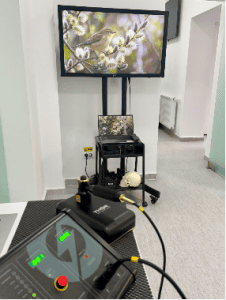
🔹 InnoByte / Pupillometry – we are investigating bite force balance, reflexes, and pupil sizes to understand the connection between the jaw and the central nervous system.
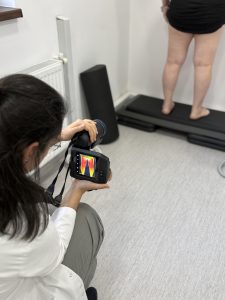
Medical thermography – we detect areas of inflammation and muscle strain.
🔹 Electromyography – we measure the activity of the masticatory muscles and identify abnormal tension.
🔹 Kinesiography – we analyze jaw movements (opening, closing, lateral movement) with digital precision.
🔹 Postural assessment – analyzing how imbalance is transmitted ATM throughout Corporation.

Temporomandibular Joint (TMJ) Therapy and Treatment:
After completing the diagnosis, the treatment is always personalized and combines modern minimally invasive methods:
Laser photobiomodulation pain therapy (LLLT/HILT) – reduces inflammation, promotes lymphatic drainage, relaxes muscles, and accelerates healing. It is a completely painless and safe method, also used in international medical centers.
Neuromuscular orthodontic appliances (custom splints) – DO NOT confuse with simple mouthguards or orthodontic braces. Our splints are made based on objective examinations and reposition the mandible to a correct functional position, restoring muscular and joint balance.
Physiotherapy and osteopathy / postural therapy – we correct imbalances in the postural chain (neck, shoulders, spine, pelvis) to prevent recurrences.
Laser acupuncture – a modern, non-invasive method that combines the principles of traditional Chinese medicine with laser technology for muscle relaxation and regulating energetic balance.
It is important to be aware that a disorder ATM can be associated with other pathologies, such as dizziness, neck and/or lower back pain, heart arrhythmias, hypertension, gastro-esophageal reflux, sleep disorders with nocturnal apnea, and menstrual cycle irregularities.
If you feel persistent pain or discomfort in the facial muscles, or if you have difficulty moving your jaw, it is important to seek medical advice. Early diagnosis and treatment can prevent further complications and improve your quality of life.
Neurostomatology includes the study and treatment of neurological disorders that affect the oral and maxillofacial regions. This can encompass a wide range of conditions, including: * **Movement disorders:** Such as Parkinson's disease, essential tremor, dystonia, and tics, which can cause involuntary movements in the face, jaw, tongue, and lips, affecting speech, chewing, and swallowing. * **Facial pain syndromes:** Including trigeminal neuralgia, atypical facial pain, and glossopharyngeal neuralgia, which cause severe pain in the face and oral cavity. * **Oral manifestations of neurological diseases:** Such as burning mouth syndrome, taste disorders, dry mouth (xerostomia) due to neurological damage, and oral mucosal changes associated with conditions like multiple sclerosis or stroke. * **Dysphagia (swallowing difficulties):** Often resulting from neurological conditions affecting the muscles and nerves involved in swallowing. * **Speech disorders (dysarthria and aphonia):** Caused by neurological damage affecting the muscles of articulation and phonation. * **Temporomandibular joint (TMJ) disorders of neurological origin:** When pain or dysfunction in the TMJ is directly related to nerve issues. * **Neuromuscular dentistry:** Focusing on the relationship between neurological signals and muscle function in the head and neck, often related to bite and jaw positioning. In essence, neurostomatology bridges the fields of neurology and stomatology (dentistry and oral medicine) to address complex conditions where the nervous system directly impacts the structures and functions of the mouth and face.
- Diagnosis and Treatment of Orofacial Pain / Mandibular Pain Therapy: Neurostomatology deals with conditions such as Trigeminal neuralgia, chronic pain syndromes, and other forms of orofacial pain that are related to nerve dysfunction.
- Temporomandibular Joint (TMJ) Disorders: Treatment and management of dysfunctions ATM, which can cause jaw pain, joint noise, and difficulty moving the jaw.
- Facial Paralysis Evaluation and treatment problems related to facial nerve paralysis, which can affect facial expression and oral functions.
- Neurological Problems Related to Dentition: The investigation and treatment of neurological problems associated with teeth and gums, such as phantom pain after tooth extractions or other procedures.
- Psychosomatic Conditions in Dentistry: Neurostomatology also addresses the link between stress, anxiety, and Oral health, especially in patients with bruxism (teeth grinding) or other behavioral disorders that affect the oral cavity.
The Importance of ATM/TMJ Health
Neurostomatology is an essential specialty for the effective treatment of conditions TMJ complexities that cannot be effectively addressed by dentistry or neurology alone. The interdisciplinary approach allows for better Understanding of pain and dysfunction mechanisms, thus offering more effective and personalized treatments for patients.
Neurostomatology contributes to improving patients' quality of life by reducing chronic pain and restoring normal oral functions.
TMJ and/or TMJ health are very important in the relationship between correct mastication (chewing) and cognitive function, especially its impact on attention and memory.
Chewing and cognitive functionStudies from the year 2000 show that chewing improves attention and memory by reducing stress and optimizing learning processes. This is linked to the activation of the reticular formation, an area of the Central Nervous System closely associated with the motor nucleus of the trigeminal nerve.
Trigeminal Activation and Brain FunctionsActivation of trigeminal signals plays a crucial role in the Reticular Activating System, which regulates brain alertness and its neural processes. This explains why chewing can rapidly improve cognitive functions.
Pupillary dilation and cognitive indicatorsResearch conducted by Prof. Giuseppe Moruzzi has shown that trigeminal stimulation not only causes a typical EEG pattern of alertness but also pupil dilation (referred to as „attentional mydriasis”). This can be an early indicator of neurodegenerative diseases such as Alzheimer's or Parkinson's.
Chewing and neuroprotectionChewing activates Locus Coeruleus, which releases norepinephrine, a neurotransmitter essential for brain functions, including the longevity of neurons in the hippocampus. This suggests that effective bilateral chewing could help prevent neurodegenerative and psychiatric disorders.
Clinical ApplicationsATM health and occlusal balance can influence pupillary symmetry, and asymmetry (anisocoria) may indicate wider functional and biological asymmetries between the two cerebral hemispheres. This can lead to cognitive, motor, behavioral, or vascular disorders. Occlusal balancing through methods such as the use of neuromuscular mobile orthotic devices or implant prosthetics is recommended to improve both anisocoria and cerebral performance.
Posture:
Posture and the TMJ – why they matter more than you think
At La Innovation Medical Center, we don't view the temporomandibular joint (TMJ) as an isolated problem.
Your body functions as a whole, and jaw dysfunction can unbalance the entire muscular and joint chain—from your neck and shoulders to your spine, pelvis, and feet. Similarly, poor posture (sitting at a desk for long periods, hunching over, misaligned feet) can overstrain The temporomandibular joint (TMJ) and can trigger pain headache, muscle contractures, dizziness, or jaw locking.
How do we investigate posture at Innovation Medical Center?
I have created a unique protocol in Romania, where we use cutting-edge technology and artificial intelligence (AI) to understand in detail how your body compensates:
📍 Digital Postural Analysis with AI – we measure body alignment and identify deviations even when the naked eye can't see them. AI shows us if there are shoulder rotations, pelvic imbalances, or scoliosis/spinal positional deviations that can affect the temporomandibular joint (TMJ).
Medical thermography – we detect the body's „temperature maps,” meaning areas where muscles are overworking or inflamed. Even slight tension, invisible clinically, appears on thermography, guiding treatment and preventing worsening.
📍 Musculoskeletal Ultrasound – we examine muscles, tendons, and joints to see exactly where there is overuse or hidden inflammation.
What does this mean to you?
Instead of just treating the local pain, we can discover the invisible muscle compensations – those subtle imbalances that cause the problem to recur again and again.
It is important to chew efficiently and in a balanced way for maintaining neuroplasticity and preventing neurodegenerative conditions.
Innovation Medical Center is the only Center of Excellence in Neuro-Stomatology and TMJ Dysfunction with international certification.
GENERAL ATM PROTOCOL (unique in Romania):
Step 1: Initial Consultation, Assessment Temporomandibular joint dysfunction
Step 2: Temporomandibular Joint (TMJ) Investigations and Specialized Therapies
- InnoByte/Pupilometry
- TMJ Ultrasound
- Thermography
- LLLT (laser therapy)
- Postural Therapy
- RX ATM (Gură închisă/Gură deschisă – partea stângă, partea dreaptă)
- Intraoral scan
Step 3: Neuromuscular Mobile ATM*
- Electromyography
- Kinesiography
- InnoByte in dynamic
- Orthotic mobile device custom splint (Do not confuse with fixed or removable orthodontic appliances!)
Step 4: Monthly Evaluation (Progress Tracking)
- LLLT (Laser Therapy) / Pain Therapy
- Thermography
- Laser Acupuncture
Step 5: Final evaluation (after 3, 6, or 12 months)
- RX ATM
- PUPILOMETRY EXAM (FREE)
- Ultrasound Exam (FREE)
- Therapeutic Recommendations (FREE)
The duration of the treatment depends on each patient's medical condition and will be communicated during the specialist evaluation.
Contact Us
Dacă ai întrebări sau dorești să faci o programare te așteaptă o echipă interdisciplinară fomrmată din: Specialist Chirurgie Maxilo-Facială cu 30 ani de experiență clinică, Medic de Recuperare Neurologică, Medici Dentisti, Medici cu competențe in: Ecografie, Acupunctură și Kinetoterapie, Laser Terapie, Termografie, Postrologie, Kinetoterapie
Contact us!
We're here to help you effectively manage your TMJ disorder.
Dr. Anca Adam
Medic Specialist în Medicină Fizică și de Reabilitare, compartiment recuperare, medicină fizică și recuperare neurologică, disfuncții ATM/TMJ, Expert Acupunctură Laser, MTC & Termografie Medicală.
Dr. Sam Seyedin
Primary Physician Maxillofacial Surgery cu 30 ani de experiență clinică. Specializare Laser – DUBAI.
Dr. Thomas Mendel
Medic Dentist cu 20 Ani de experiență – Specializare în Microscopia Endodontics Laser – LSO (Laser Safety Officer) AALZ Aachen Germany, Master in Laser Dentistry Competence S.F.U. Vienna
Dr. Nur Saadeddin
Medical Dentist with 15 Years of Experience: Prosthetics and Aesthetics and Laser Periodontology, LSO (Laser Safety Officer) AALZ Aachen Germany, Master in Laser Dentistry Competence S.F.U. Vienna.
Dr. Lidia Cristina Pop
Primary Care Physician Ultrasound, Acupuncture, Homeopathy cu 35 ani de experiență clinică.
Frequently asked questions
Innovation Medical Center
Address: Bucharest, Sector 1, Grigore Cobalcescu Street no. 10
Phone: +40753 666 111
Email Contact@innovationmedical.ro
Web Innovation Medical Center
TMJ X-ray consists of two static recordings of the position of the mandibular condyle within the glenoid fossa:
The first recording is made in maximum intercuspation (closed mouth).
The second recording (open mouth) can be performed in the maximum opening position or by thrust.
Where can I get a TMJ X-ray?
FM MEDIDENT
Sediu 1: Piața Victoriei – Bvd. Iancu de Hunedoara, nr. 6, bl. H4, parter
Sediu 2: Piața Unirii – Bvd. Corneliu Coposu nr. 7, bl. 104, sc. B, parter, Sector 3, București, România
Contact:
Email: contact@fmmedident.ro
Tel/Mobile: +40-213-235-907 / +40-721-885-526
How much does an ATM X-ray cost?
Cost of jaw X-rays: From 100 lei
Updated Pricing Information: FM Medident X-ray Prices
What do I need to request at the radiology center?
At the radiology center, please request:
RX ATM (mouth closed/mouth open – left side, right side).
Ensure the radiological investigation is also sent to the clinic at the email address: rx@innovationmedical.ro
1. Facial hygiene
For correct electrode application, the skin on the face and neck must be clean:
Wash your face thoroughly with a cleanser suitable for your skin type.
Avoid applying cream, makeup, or other cosmetic products on the day of the examination.
Ensure the skin is dry and free of grease.
For men: It is necessary to come shaved to ensure optimal contact of the electrodes with the skin.
Remove earrings, piercings, necklaces, or other metal accessories before the procedure.
Contact lenses must be removed before the examination.
2. Hydration and rest
Drink enough water before the procedure to prevent dehydration.
Rest well the night before to avoid excessive muscle tension.
3. Avoiding certain activities
Do not consume coffee, alcohol, or very cold/hot food before the procedure.
Avoid chewing gum or performing intense jaw exercises.
4. Informing the attending physician
Inform your attending physician if you are using any neurological substances or medications that may influence pupillometric or electromyographic measurements.
The temporomandibular joint (TMJ) plays an essential role in the proper functioning of the jaw, involved in chewing, speaking, and other facial movements. TMJ investigations are essential for the diagnosis and treatment of pain or dysfunction.
Pupillometry
What does it analyze? Pupillary diameter in various occlusal situations, providing clues about central nervous system activity and possible TMJ disorders.
How is it going?
The patient is sitting comfortably in a special chair.
The device monitors pupil movements in real time using a VR-like headset.
It is necessary for the patient to remain relaxed and follow the doctor's instructions.
b. Electromyography (EMG)
What is it analyzing? The electrical activity of the facial and neck muscles to assess how they function.
How is it going?
Small electrodes are applied to the skin in key areas.
The patient performs movements such as opening/closing the mouth or chewing.
The device records electrical activity for diagnostic purposes.
C. Kinesiography
What does it analyze? Jaw movements in various situations.
How is it going?
A frame is placed on the patient's face, and electrodes are attached to the skin.
A magnetic marker is attached to the lower incisors to track mandibular movements.
The patient performs movements such as opening the mouth fully, lateral movements, or propulsion.
For precise results, muscle relaxation is necessary before kinesiology and electromyography. This is done by:
Laser therapy: A quick, comfortable, and painless method that improves blood circulation and reduces muscle tension.
Decontracting massage: Used if there are contraindications for laser therapy.
How is it going?
The patient is sitting comfortably in the dental chair.
The doctor uses a laser device or performs slow massage movements to relax tense areas.
Temporomandibular joint (TMJ) disorders are conditions that affect the joints connecting the lower jaw to the skull, significantly impacting the proper functioning of the mouth. These disorders can cause facial pain, difficulty chewing, and can lead to jaw locking or clicking. Proper diagnosis and treatment are essential for symptom relief.
Common symptoms of temporomandibular joint disorders include pain or discomfort in the jaw, neck, or face, difficulty opening the mouth, clicking sounds a clicking or grinding sound when moving the jaw and frequent migraines. You may also experience a feeling of stiffness or tightness in the joint.
Temporomandibular joint disorders can be caused by a variety of factors, including bruxism (teeth grinding), stress and anxiety, trauma to the jaw or joint, or dental malocclusion (incorrect alignment of teeth). Muscle imbalances or inflammation can also contribute to their occurrence.
Diagnosis of joint disorders A diagnosis of temporomandibular disorder requires a detailed clinical evaluation, which may include the patient’s medical history, a physical examination of the joint, testing of jaw movements, and the use of imaging techniques such as X-rays or MRI. The doctor will analyze the symptoms and recommend the appropriate treatment based on the results.
Joint disorder treatment Temporomandibular depends on the severity of the condition and can include physical therapy, the use of a protective dental splint (in case of bruxism), anti-inflammatory medications to reduce pain and inflammation, or even surgery in severe cases. Stress management techniques and behavioral adjustments can also be helpful in preventing the recurrence of symptoms.
Conclusion:
Investigations for TMJ are crucial for correctly diagnosing dysfunctions. Adhering to the recommended preparations will ensure accurate results and a comfortable experience. For any questions, please consult your specialist doctor. Come to Innovation Medical Center – the place where technology, medicine, and empathy work together for you.
Read more news
Mi s-a blocat maxilarul. De ce nu mai pot deschide gura și ce trebuie să fac?
„Doamna doctor, până ieri îmi pocnea maxilarul. Astăzi nu mai pocnește, dar nici nu mai pot deschide gura.” Aud povestea asta în cabinet și, firesc, sperie. Pacientul încearcă să deschidă
Stomatolog, gnatolog sau medic? Cine tratează, de fapt, disfuncțiile ATM?
Ce este gnatologia, de ce ATM se află la granița dintre medicină și stomatologie și de ce diagnosticul modern e adesea multidisciplinar „Mă doare maxilarul.
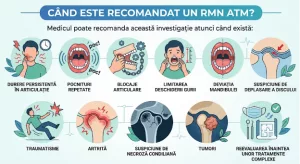
Do you have temporomandibular joint pain, clicking, or locking? A TMJ MRI can show what X-rays and CT scans cannot.
Pain in front of the ear, joint noises, difficulty opening the mouth, or a sensation of the jaw „locking” are among the most common reasons for
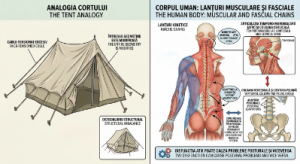
Your jaw hurts. Why are we assessing your posture?
„I came for my jaw. Why are you making me sit up straight?” The connection between the TMJ and the whole body is one of the most common questions.
The temporomandibular joint (TMJ) and body posture: a more important relationship than it seems
The relationship between the temporomandibular joint (TMJ) and body posture is currently one of the most important concepts in modern functional medicine. Studies published in PubMed
ATM, anxiety, and bruxism: how stress gets stuck in the jaw
Wake up with a clenched jaw, morning headaches, or a feeling that you're „clenching your teeth” without realizing it? Many patients attribute these symptoms to

#TMJ Treatment # Laser Therapy for TMJ # Pain Relief # Jaw Discomfort # TMJ Disorder # Minimally Invasive # Jaw Rehabilitation # Orofacial Pain #TMJRelief #HealthyJaw #NeuroDentistry #TTMJTreatment #TTMJLaserTherapy #PainRelief #JawDiscomfort #TTMJDisorder #MinimallyInvasive #JawRehabilitation #OrofacialPain#MinimallyInvasive #JawRehabilitation #JawDisorder #JawPainRelief #HealthyJaw #NeuroDentistry
# Treatment Jaw Pain # Temporomandibular Joint Dysfunction TMJ Symptoms #Bruxism treatment #Mandibular joint pain #MDTM specialist in Bucharest #Mouthguard for bruxism #Physiotherapy for TMJ disorders #Laser treatment for mandibular pain #Causesof jaw pain




















 Romanian
  English
