
Introduction
Temporomandibular joint (TMJ) dysfunction is a complex condition affecting millions of people, manifesting as facial pain, difficulty chewing, joint noises, and even postural problems. While traditional diagnostic methods focus on local symptoms, a multidisciplinary and neuro-stomatological approach can provide a much more accurate overview, leading to effective and personalized treatment.

The connection between the ATM and the nervous system
An often-overlooked aspect in the diagnosis of TMJ dysfunction is its influence on the autonomic nervous system. Recent studies in the literature highlight a significant correlation between asymmetric electromyographic activity of the masticatory muscles and pupil size. This phenomenon suggests that sensory and motor signals transmitted through the trigeminal nerve can influence the autonomic regulation of the pupils, indicating an impact The larger side of TMJ dysfunction on cerebral and neurovegetative function.
This discovery has major implications for the diagnosis and TMJ dysfunction treatment, demonstrating that an imbalance in the masticatory muscles can affect the entire body through the central nervous system.

Neuro-dental assessment – an essential step in diagnosis (unique method in Romania)
În cadrul clinicii noastre Innovation Medical Center – București, abordăm disfuncțiile ATM through a complex set investigations that allow for an objective and detailed assessment of neuro-stomatological function:
Pupillometry
Pupillometry is an advanced analysis method that allows for the observation of changes in pupillary diameter, an indicator of autonomic nervous system activity. The relationship between occlusal balance, the trigeminal nerve, and norepinephrine secretion influences pupil size, providing essential clues about the patient's neurovegetative function.

Ultrasound (TMJ)
Temporomandibular joint (TMJ) ultrasound is a non-invasive imaging method that allows visualization of the soft structures of the joint, such as the articular discs, joint capsule, and ligaments. It provides information about the presence of inflammation, disc displacement, or degenerative changes, making it essential for the accurate diagnosis of TMJ dysfunction.

- Thermography:
Thermography is an advanced technique that allows for the assessment of the surface temperature of the masticatory muscles. An increase in temperature in certain areas can indicate inflammation or chronic muscle contractures. This method is useful in analyzing TMJ disorders and in monitoring therapy progress.

Intraoral scan
Intraoral scanning provides a detailed image of the patient's dental arches and occlusion. This allows the dentist to precisely observe the distribution of dental contacts and any occlusal imbalances that may contribute to TMJ dysfunction.
Postural Analysis
Because Temporomandibular joint (TMJ) dysfunction influences body posture., we evaluate the patient's alignment in static and dynamic positions to correlate occlusion problems with their impact on the entire musculoskeletal chain. This analysis involves clinical evaluation, whole-body thermographic imaging, and AI-assisted postural assessment.

Temporomandibular Joint X-rays (TMJ X-ray Mouth Closed/Mouth Open - left side, right side):
In cases where further assessment of the bone structure of the TMJ is necessary, a TMJ X-ray is recommended. This provides information about the position of the mandibular condyles during different phases of movement and about possible degenerative changes.
Postural and Temporomandibular Joint (TMJ) Rehabilitation Therapy
Rehabilitation plays a crucial role before and during treatment. ATM disorders. The more balanced the patient's posture is before occlusal rebalancing, the more stable and lasting the results will be. Considering that postural syndrome neurophysiologically involves neuromotor reprogramming, the treatment must be multidisciplinary and include the following procedures:
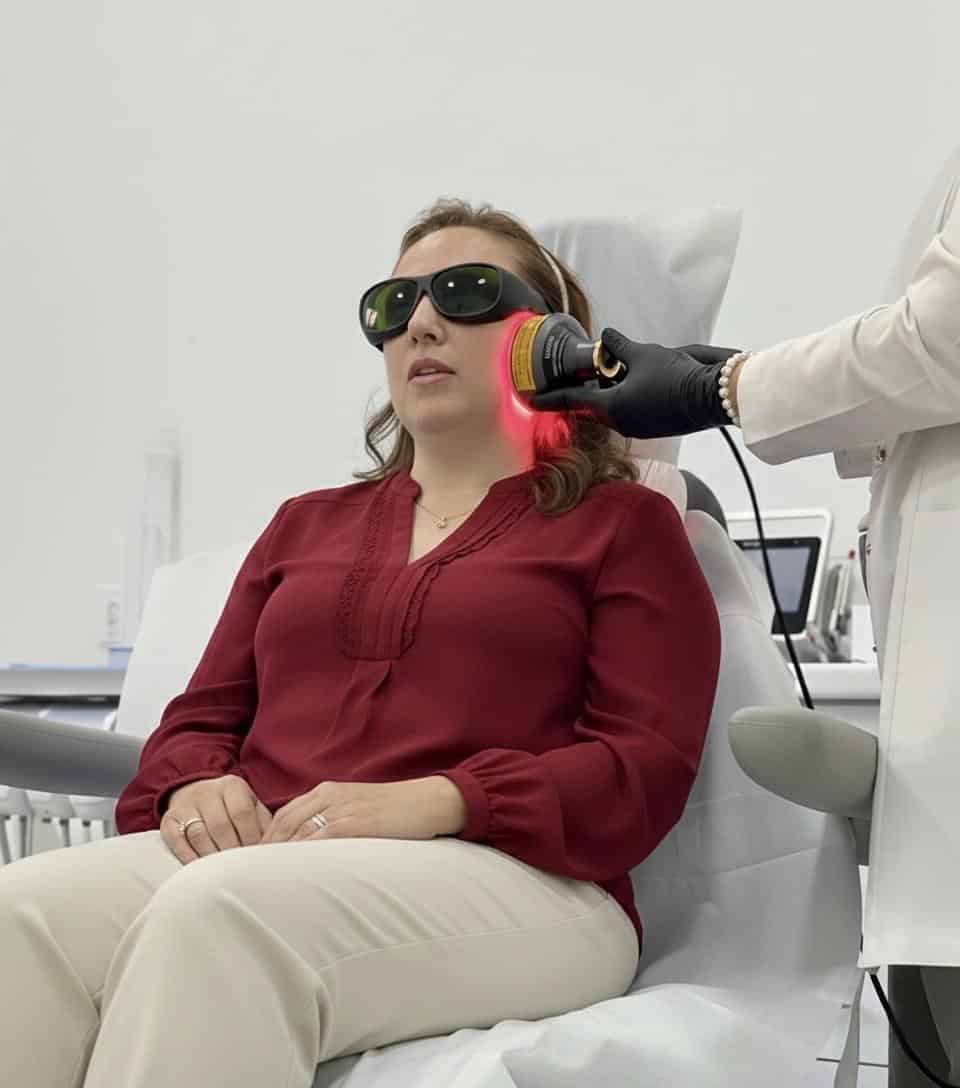
Laser therapy
Laser therapy is an effective method for reducing inflammation, relaxing muscles, and stimulating tissue regeneration. It is used in the treatment of TMJ dysfunction and in myofascial therapy for pain relief and improved joint mobility, for rebalancing myofascial chains.
2. Kinesiotherapy and postural rehabilitation
Kinetotherapy is essential for correcting muscular and postural imbalances. Personalized exercises contribute to improving TMJ function and restoring musculo-articular harmony.
3. Myofascial Therapy
Through specific relaxation and muscle decompression techniques, myofascial therapy helps reduce muscle tension and to improving TMJ functionality.
4. Laser acupuncture
Acupuncture can be used to regulate muscle tone and reduce pain associated with TMJ dysfunction. It has a beneficial effect on neurovegetative balance and muscle function.
Investigating the function of masticatory muscles, mandibular biomechanics, and determining occlusal rehabilitation parameters
To personalize the treatment and create an effective orthotic device, the following investigations will be carried out:
1. Electromyography of the musculature:
It allows us to measure the muscular activity of the masticatory muscles, highlighting potential asymmetries that contribute to TMJ tension.

2. Kinesiography - Studies mandibular movements and their coordination, providing essential data for the creation of a custom orthodontic appliance.
Personalized treatment – 3D orthotic device and myofunctional devices
Depending on the investigation results, occlusal treatment for TMJ dysfunction may include:
- Custom 3D printed orthopedic devices, which allows for the rebalancing of masticatory forces and reduction of joint tension.
- Myofunctional devices used especially in children during their growth period to guide proper jaw development, correct existing malocclusions, and prevent future temporomandibular joint (TMJ) dysfunctions.
Personalized treatment – 3D orthotic device and myofunctional devices
Depending on the investigation results, TMJ disorder treatment may include:
Custom 3D printed orthopedic devices, which allows for the rebalancing of masticatory forces and reduction of joint tension.
Myofunctional devices used especially in children during their growth period to guide proper jaw development, correct existing malocclusions, and prevent future temporomandibular joint (TMJ) dysfunctions.
Postural reeducation and myofunctional therapy Laser, to correct muscle imbalances that contribute to the patient's symptoms.
Conclusion
TMJ dysfunction doesn't just affect the jaw, but it clearly impacts the entire body. A comprehensive neuro-stomatological evaluation allows for an accurate diagnosis and a treatment tailored to each patient. By combining modern technologies with a multidisciplinary approach, we can offer innovative and effective solutions for patients with TMJ dysfunction.
Dr. Anca Adam
Innovation Medical Center – București




















 Romanian
  English