
Interdisciplinary medical investigations for the temporomandibular joint
Patient M.O., aged 41, presented to Innovation Medical Center with complex symptomatology temporomandibular joint (TMJ), including pain and paresthesia in the left mandibular branch, profuse sweating, headache, and a decrease in global muscle strength, all significantly affecting quality of life. These symptoms appeared two years after a trauma sustained in 2021, consisting of mandibular bicondylar fractures and a non-displaced fracture of the left paramental region, treated conservatively.
In the summer of 2023, the patient began experiencing recurrent episodes of algoparesthesia localized to the left mandibular branch, accompanied by a sensation of intraoral pressure, profuse sweating, and global muscle weakness. These episodes were triggered by simple activities, such as lifting small weights, vibrational movements, acceleration and deceleration, or intense emotional states. Prior to presenting at the clinic, the patient was diagnosed with post-traumatic trigeminal neuralgia and treated with medication, with a partial improvement in symptoms.
The Innovation Medical Center, an assessment was made multidisciplinary neuro-stomatology detailed, utilizing advanced minimally invasive technologies to establish therapeutic management. Among the evaluation methods was pupillometry, a technology unique in Romania, which measures pupil diameter, providing insights into the functioning of the autonomic nervous system. Pupillometry is a non-invasive method used to measure pupil size and symmetry in different situations, offering valuable information on how muscle activity and therapeutic interventions influence the autonomic nervous system.
Following the evaluation, a personalized treatment plan was established, including the use of a Orthotic device neuromuscular mobile device manufactured in Italy, intended for occlusal repositioning and balancing Temporomandibular joint (TMJ). This device helps reduce symptoms and restore normal joint function.
This case highlights the importance of a multidisciplinary approach and the use of advanced technologies in diagnosticarea și tratamentul afecțiunilor complexe ale ATM – articulației temporo-mandibulare și ale sistemului nervos autonom.
In our clinic, we have conducted a detailed Neuro-Stomatological multidisciplinary evaluation, using Advanced minimally invasive ATM technologies to determine the course of treatment. This involved blood tests as well as an assessment through:
PUPILOMETRIE – A unique technology in Romania that measures pupil diameter, offering clues about the functioning of the autonomic nervous system, which regulates involuntary functions.
Pupillometry is a non-invasive method used to measure pupil size and symmetry in different situations. In the context of evaluating temporomandibular joint (TMJ) disorders, this technique offers valuable insights into how muscle activity and therapeutic interventions influence the autonomic nervous system.


Electromyography – pentru a evalua activitatea musculară a mușchilor masticatori, și pentru a identifica eventualele tensiuni musculare anormale.
EMG measures the electrical activity of the masticatory muscles, providing information about muscle tone under various conditions such as rest, chewing, or teeth clenching. This data is crucial for identifying Muscle imbalances associated with TMD.
kinesiography temporomandibular joint (TMJ) – o tehnologie care măsoară mișcarea mandibulei pentru a detecta disfuncții ocluzale și articulare.
Kinesiography is a modern technique used to record jaw movements in three dimensions, providing precise information about the trajectory, amplitude, and speed of these movements during daily functions such as opening the mouth, chewing, speaking, or swallowing.
Advantages:
Non-invasive and accurate: The procedure does not involve significant pain or discomfort for the patient.
Three-dimensional analysis: Allows for a detailed understanding of mandibular dynamics in real-time.
Integration with other technologies: It can be used in conjunction with electromyography for a comprehensive assessment of neuromuscular function.
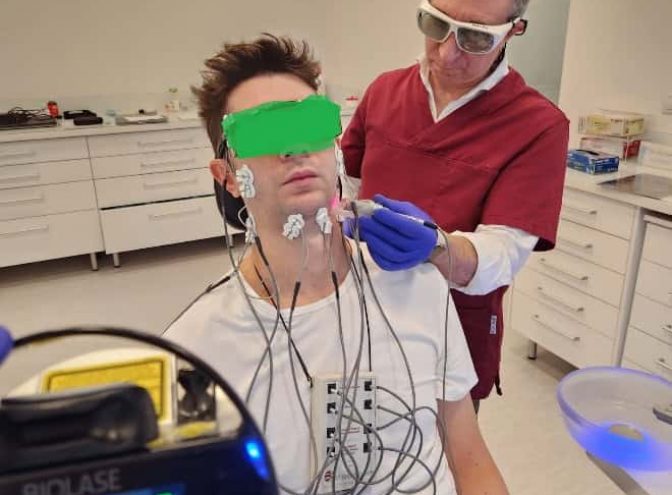
MUSCLE RELAXATION WITH HILT LASER TECHNOLOGY
HILT (High-Intensity Laser Therapy) laser in ATM treatment is laser therapy high intensity, used in the rehabilitation of temporomandibular joint (TMJ) dysfunctions. This uses a deep-penetrating laser beam to relax the musculature, reduce pain and inflammation and restore functional balance to the masticatory muscles.

Personalized treatment and patient evolution
Custom orthotic device
I designed a unique orthotic device for the patient, based on the results of complex analyses that the patient wears overnight and for a few hours each day. This is a custom medical device that corrects jaw position and reduces pressure on the temporomandibular joint (TMJ). After using the device for the first week, the patient reported:
Headache relief.
A more comfortable jaw position
Reduction of the sensation of intraoral inflammation.
Temporomandibular Joint (TMJ) Therapy with HILT Laser
High-Intensity Laser Therapy (HILT) was applied to reduce inflammation and relax tense muscles. This advanced method stimulates cell regeneration and activates the body's natural healing mechanisms. After the first session, the patient noticed:
A significant decrease in muscle tension.
A reduction in perceived pain.
A general improvement in mood and sleep quality.

Patient benefits of HILT therapy:
Non-invasive: The procedure does not involve discomfort or invasive interventions.
Rapid effect: Relaxation and pain relief occur after the first few sessions.
Security: It is safe for repeated use.
Clinical Benefits:
Relaxation of chewing muscles:
HILT reduces muscle spasms and tension, facilitating normal TMJ function.
Pain and inflammation reduction:
The laser has an immediate analgesic effect, reducing discomfort associated with TMJ disorders.
Accelerating healing:
Stimulates the regeneration of affected tissues and restores temporomandibular joint mobility.
Joint function improvement
By restoring muscular balance, HILT helps to correctly realign the TMJ components, preventing further joint wear.
HILT laser therapy is an essential component of treating TMJ disorders, offering an effective method to reduce muscle tension and restore functional balance. Integrating this therapy into the neuromuscular protocol optimizes clinical outcomes and patient comfort.
Postural therapy
Since the patient's posture directly influences symptoms, and balance ATM influences posture, there is an indication for specific exercises to correct head and neck posture. Postural therapy includes spinal alignment and muscle relaxation techniques, contributing to the reduction of stress on the temporomandibular joint and the nervous system.
Conclusions
Our patient is an example of success with multidisciplinary and personalized treatment. By integrating advanced technologies and implementing an individualized therapeutic plan, a significant reduction in the complex symptoms that have affected their life for years has been achieved. This case highlights the importance of an innovative scientific approach in treating complex dysfunctions of the temporomandibular joint and the autonomic nervous system.
Dr. Anca Adam
Innovation Medical Center – București




















 Romanian
  English