
(Bruxism Explained in 2026)
Most of the time, when a patient learns they grind their teeth, their reaction is instinctive: „Does that mean I have a dental problem?” It seems logical. The teeth are what rub against each other, wear down, and sometimes become sensitive. Everything seems to point in the same direction.
And yet, in reality, things are much more nuanced.
In most cases teeth grinding — medically known as bruxism — It doesn't start with the teeth. The teeth are just what „show” the problem, not what always generates it.
What is bruxism, really?
Bruxism is a parafunction that represents the involuntary contraction of the masticatory muscles, leading to clenching or grinding of the teeth in one or more directions. It can occur during the day, when the patient holds their jaw tense without realizing it, or at night, when conscious control disappears completely.
This difference is important. Nighttime bruxism is not a habit you can stop through willpower. It is an automatic bodily reaction, regulated by the nervous system.
In other words, it's not something you „do,” but something that „happens.”.
Why is this NOT a dental problem?
To understand correctly, we need to change perspective.
The teeth are passive structures in this process. They do not initiate movement, control force, or decide when clenching occurs. All of these are determined by the musculature and the nervous system. In bruxism, the „steps” are repeated muscle contractions, and the teeth are the surface on which they manifest.
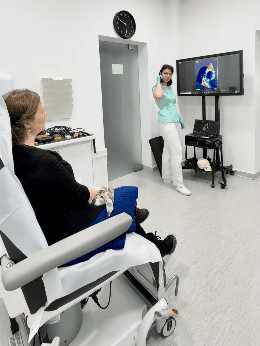
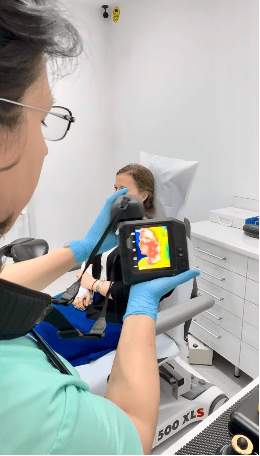
In practice, the real difference occurs when bruxism is not treated as an isolated symptom, but as part of a complex mechanism. Innovation Medical Center, evaluation doesn't stop at the dental level. The analysis includes Musculature masticatory, the function of the joint temporalmandibular relation occlusal and the correlation with the general symptomatology of patient. Depending on the case, modern functional evaluation methods are used — from detailed clinical analysis to technologies such as medical thermography, which can highlight areas of muscle hyperactivity or inflammation, providing a objective overview of imbalances.
This approach allows for not only the identification of bruxism, but more importantly understanding the dominant causeIs it a muscular problem, a joint problem, an adaptation to stress, or a consequence of functional instability? The answer to this question completely changes the direction of treatment and explains why, in many situations, Standard solutions are not enough.
At the same time, Bruxism cannot be separated from the rest of the body. The relationship between the jaw and posture is direct, and imbalances can work in both directions — upward or downward. That is why collaborating with Expert Laser Center Essential oil. Comprehensive postural and functional assessment can highlight whether jaw tension is part of a larger chain involving the cervical spine, the shoulder girdle, or even plantar support.
In this context, treatment no longer aims only at protecting teeth or local relaxation, but rather it seeks global functional rebalancing. Interventions may include laser therapy multiwave, recovery techniques, and postural reeducation, all integrated into a coherent plan. This vision—in which the ATM, musculature, and posture are analyzed together—is what allows long-term stable results and differentiate the modern approach from fragmented treatments.
What actually triggers bruxism?
Behind this phenomenon lie several overlapping factors.
One of the most important ones relates to the nervous system and stress. During periods of emotional tension, the body enters a state of alert. This state affects not only the mind but also the body. The muscles become more tense, and the jaw is one of the areas where this tension frequently accumulates.
Studies published in Journal of Oral Rehabilitation (Manfredini and collaborators) show a clear association between anxiety, stress, and the onset of bruxism. Basically, the body finds a way to „release” tension, and the jaw becomes one of these release points.
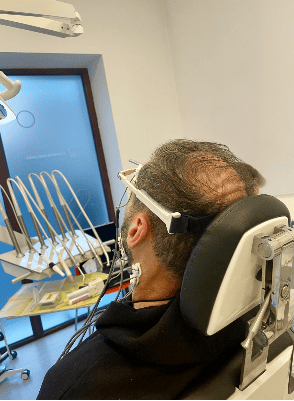
A second important mechanism relates to sleep. During the night, bruxism frequently occurs in short episodes, associated with microarousals of the brain. These episodes are linked to the activity of the autonomic nervous system and not to a dental problem per se.
Literature from Sleep Medicine Reviews Show that bruxism is correlated with these sleep fluctuations and how the brain regulates states of wakefulness and relaxation.
To all of this, temporomandibular joint dysfunction can also be added. An unstable joint or already overworked muscles can amplify the tendency for clenching, creating a vicious cycle: tension, pain, and tension again.
Bruxism is not an isolated problem, but part of a larger system involving the joint, musculature, and nervous system, which closes like a vicious cycle at the level of the dentition, which is most often not perfect.
How do you know you're grinding your teeth?
Paradoxically, many patients are not aware of this, especially when bruxism occurs at night.
However, the body offers subtle clues. In the morning, a sensation of jaw fatigue may appear, as if after exertion. Sometimes headaches or a diffuse pressure in the facial area occur. Other times, teeth become sensitive or signs of wear are observed.
There are situations where the patient only learns about bruxism in the office, following a clinical examination.
Why a mouthguard is NOT the complete solution
Gutters are, without a doubt, one of the most used methods for bruxism. And they play an important role.
But it is essential that we understand exactly what it does.
A night guard does not stop muscle contractions and does not eliminate the mechanism that generates bruxism. It functions more as a protection for the teeth, reducing the mechanical effects of grinding, but in many cases, treatment must go beyond simple protection.
How to correctly address bruxism in 2026?
The modern approach starts from the idea that bruxism is a multifactorial phenomenon.
La Innovation Medical Center's evaluation includes an analysis of the musculature, temporomandibular joint, occlusion, posture, and the patient's general context, including stress and sleep quality.
The treatment is tailored according to these elements. It may include custom splints, as well as muscle relaxation techniques, lifestyle interventions, and anti-inflammatory therapies.
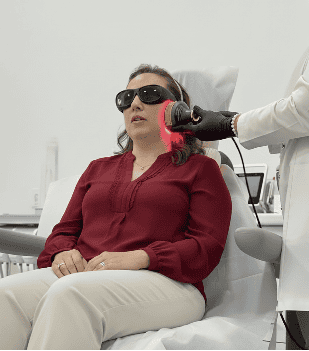
LLLT laser therapy is one of the methods used for reducing muscle pain and inflammation. Randomized placebo-controlled studies have shown beneficial effects on symptoms associated with TMD dysfunctions.
The important thing is that the treatment is not standard, but personalized.
How do patients describe this problem?
The descriptions are often simple, but suggestive.
„I wake up with a clenched jaw.”
„I feel like I'm clenching my teeth without realizing it.”
„I have headaches in the morning and I don't understand why.”
These seemingly nonspecific signals may indicate a complex mechanism behind them.
Frequently Asked Questions (FAQ)
Over time, it can lead to tooth wear, sensitivity, and joint problems.
Stress is an important factor, but it's not the only one involved.
Protects teeth, but doesn't eliminate the cause.
In many cases, it can be significantly controlled with the right approach.
If there are symptoms or dental or joint involvement, treatment is recommended.
Teeth grinding isn't a simple problem, and in most situations, it's not a dental problem in the classic sense. It's more of a signal that the body is functioning under a state of tension—whether we're talking about the nervous system, sleep, or musculature. Understanding this completely changes how we view treatment because, sometimes, the teeth aren't the cause. They're just where the problem is visible.
Integrated functional treatment helps the entire body achieve long-term results. Innovation Medical Center is an affiliated center and European partner of Sigmund Freud University Vienna and AALZ Germany, and is affiliated with ISLD (International Society for Laser Dentistry). These academic collaborations guarantee the application of Clinical protocols aligned with the highest international scientific standards in laser dentistry and complex therapy. The center utilizes medical infrastructure to 2026 standards and has a medical team specialized in functional assessment and integrated treatment.
Schedule an evaluation at a specialized center for laser therapies and integrated medicine.!
📍 Innovation Medical Center
📍 Bucharest – www.innovationmedical.ro
📞 0753 666 111
Autor: Dr. Anca Adam, Medic Specialist în Medicină Fizică și de Reabilitare, compartiment recuperare neurologică și disfuncții ATM/TMJ, Expert Acupunctură Laser & Competență în Medicină Tradițională Chineză (Tai Yuan, China), Termografie Medicală (Barcelona, Spania), LSO (Laser Safety Officer) AALZ Aachen Germania.




















 Romanian
  English