
You wake up with your jaw tense., AI headaches morning or do you feel like„You're clenching your teeth”unintentionally? Many patients attribute these symptoms to stress – and they are right. It's just that stress doesn't just stay on a psychological level.
Stress expresses itself in the body, and one of the first areas where it „settles” is the jawbone.
How does anxiety turn tension into muscle contraction
Anxiety activates the autonomic nervous system, especially the sympathetic component—responsible for the „fight or flight” reaction! In this state, muscles become more tense, breathing changes, and the body remains in a Subtle form of alert.
The jaw is one of the most sensitive areas to this activation. The masticatory muscles, in particular The master and the temporal, It reacts through repeated or sustained contractions, which leads to clenching teeth bruxism.
A simple comparison: it's like clenching your fist for hours without realizing it. At some point, the pain no longer comes from movement, but from the constant tension.
Bruxism: A Nervous System Reaction, Not Just a „Habit”
Bruxism, especially nocturnal bruxism, is not a voluntary act. It is a manifestation of how the brain regulates stress and sleep.
📚 Studies in the Journal of Oral Rehabilitation and Sleep Medicine Reviews (indexed in PubMed) show that:
* bruxism is associated with Micro-treasures during sleep
is correlated with the activity of the autonomic nervous system
* has a significant link with anxiety and psychological stress
In other words: it's not the teeth that „decide” to clench, but the brain.
Vicious cycle: anxiety → bruxism → pain → anxiety
As time goes by self-sustaining mechanism. Anxiety generates muscle tension and bruxism. Bruxism leads to pain—in the jaw, face, or head. Pain, in turn, increases stress levels and hypervigilance.
The result is a vicious cycle in which:
* The body remains tense.
sleep becomes fragmented
* symptoms persist or intensify
DATM functions cannot be separated from the patient's emotional context.
Why do you feel pain in the morning?
Many patients notice that their symptoms are more intense in the morning:
jaw rigid
diffuse facial pain
headaches
The explanation is due to nocturnal bruxism episodes. During sleep, muscle contractions can be repetitive and intense, without the patient being aware.
It is similar to making a prolonged muscular effort without a break. In the morning, the body „feels” that effort.
Signs that anxiety and stress are affecting your jaw
There are a few typical signs:
clenching teeth during the day
* jaw pain or fatigue
tension headaches
pressure sensation in the face
unrefreshing sleep
joint noises or stiffness
These symptoms do not occur randomly, but are an expression of a direct relationship between the nervous system and the masticatory musculature.
Correct diagnosis: more than just a consultation
In 2026, the assessment of bruxism and TMJ disorders must be integrated. Innovation Medical Center, the diagnosis includes:
* TMJ and cranio-cervical muscular clinical evaluation
correlation of symptoms with stress and sleep
functional analysis of occlusion and posture
bite force assessment (identifying imbalances)
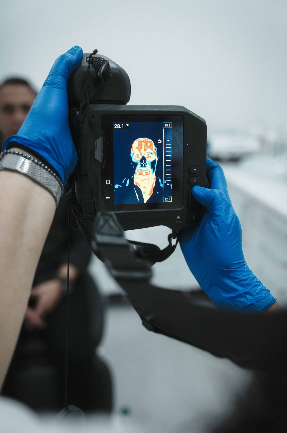
Medical thermography for highlighting muscle hyperactivity
* TMJ ultrasounds for dynamic joint analysis
This approach allows for the identification of the dominant mechanism: is it a muscular, joint, or neurofunctional component with psychogenic activation?
Modern treatment: system control, not just symptom control
Treatment is not limited to protecting the teeth. At the Innovation Medical Center, the approach is multidisciplinary and includes:
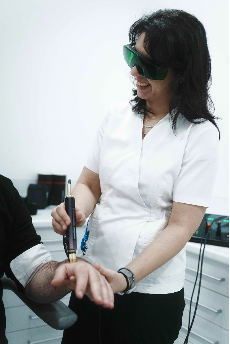
* laser therapy (LLLT – THOR), with proven anti-inflammatory, analgesic, and regenerative effects
custom gutters (tailored to the diagnosis, not standard)
Muscle relaxation and neuromuscular control
integration of stress management techniques
Functional approach to sleep and posture
* classical acupuncture, laser acupuncture, and auriculotherapy
Positioning and international standards
Innovation Medical Center is an associated center and European partner of Sigmund Freud University Vienna and AALZ Aachen, being affiliated ISLD International Society for Lasers Dentistry.
These academic collaborations ensure the implementation of clinical protocols aligned with the highest international standards in laser dentistry and complex therapy. The center utilizes medical infrastructure at 2026 standards and has a team interdisciplinary specialized in integrated functional assessment.
How do patients describe this problem
„I feel like I can't relax my jaw.”
„I wake up tired, even though I slept.”
„It's like I'm holding stress in my teeth.”
These descriptions are often more accurate than any medical term.
❓ Frequently Asked Questions (FAQ)
Now exclusively, but stress and anxiety are major factors.
In many cases, it can be effectively controlled with the right approach.
It protects the teeth, but doesn't treat the cause.
It can become chronic and worsen if not addressed properly.
Anxiety doesn't just stay at a psychological level. It manifests in the body, and the jaw is one of the most common areas where this tension becomes visible. Understanding this mechanism completely changes the perspective on bruxism. Because sometimes, stress isn't visible on your face. It's felt in the jaw.
Schedule an assessment at a center specializing in laser therapies and integrative medicine, Innovation Medical Center.
Innovation Medical Center
📍 Bucharest – www.innovationmedical.ro
📞 0753 666 111
Autor: Dr. Anca Adam, Medic Specialist in Medicina Fizica si de Reabilitare, compartiment recuperare neurologică și disfuncții ATM/TMJ, Expert Acupunctură Laser & Competenta Medicina Traditionala Chineza (Tai Yuan, China), Termografie Medicală (Barcelona, Spania), LSO (Laser Safety Officer) AALZ Aachen Germania




















 Romanian
  English