

Introduction
Persistent headaches and facial tension are common problems, but few people consider a surprising potential cause: the temporomandibular joint (TMJ). This joint, essential for chewing, speaking, and facial expressions, can significantly impact the overall health of the head, neck, and entire spine.
ATM are two meanings: 1. **Automated Teller Machine (ATM):** This is a self-service banking machine that allows customers to make basic transactions without the help of a branch agent. This is the most common meaning in everyday conversation. 2. **Temporomandibular Joint (TMJ) Disorder:** This refers to a problem with your jaw, the muscles that control jaw movement, and the temporomandibular joints, which are the hinges on each side of your head that connect your jawbone to your skull. **How TMJ Disorder can cause headaches:** TMJ disorders can cause headaches for several reasons: * **Muscle Tension:** The muscles surrounding the jaw, face, and even the neck can become tight and strained due to TMJ issues. This muscle tension can radiate upwards and cause tension headaches, which are often described as a dull, aching pain on both sides of the head or a feeling of pressure. * **Nerve Irritation:** The trigeminal nerve, which is responsible for sensation in the face and jaw, can be compressed or irritated by TMJ problems. This irritation can lead to headaches, often felt around the temples, forehead, or even the back of the head. * **Referred Pain:** Pain from the TMJ can be "referred" to other areas, including the head. This means that even though the problem originates in the jaw joint or surrounding muscles, the sensation of pain is felt elsewhere, commonly as a headache. * **Cranial Misfiring:** In some cases, the nerves that control the jaw muscles and those that cause headaches might work in a way that's not quite right, leading to a headache when the jaw is stressed. * **Bruxism (Teeth Grinding/Clenching):** Many people with TMJ disorders also clench or grind their teeth, especially at night. This increased muscle activity puts extra strain on the jaw joint and muscles, contributing to both jaw pain and headaches.
ATM is the joint connects the mandible to the temporal bone of the skull. Any dysfunction of this can affect surrounding muscles, nerves, and even blood circulation, triggering symptoms such as:
Frequent headaches, similar to migraines
Feeling of pressure in the temple area
Tension in the jaw and facial muscles
Pain radiating to the neck and shoulders
Facial fatigue
The connection between ATM and the nervous system
Dysfunction ATM doesn't just affect muscles and joints, they also have an impact on the nervous system.
Trigeminal nerve, one of the most important cranial nerves, controls both facial sensation and the activity of the masticatory muscles. When chewing is affected Headaches and facial tension.
Muscle strain and chronic tension can lead to nerve compression and changes in cerebral blood flow, promoting the onset of headaches.
Relationship with posture – The TMJs are biomechanical connections to the neck and cervical spine. Poor posture can worsen symptoms and contribute to persistent headaches.

Symptoms indicating a possible TMJ disorder
If you frequently experience headaches or facial tension, also check for the presence of the following symptoms:
Clicking or popping jaw sounds
Lockjaw or difficulty opening the mouth
Discomfort when chewing
Pain around the ear with no apparent cause
Bruxism (teeth grinding) or jaw clenching sensation in the morning

How can temporomandibular joint (TMJ) dysfunction be diagnosed and treated?
Within our clinic, we utilize a series of investigations complex for evaluating ATM function and determine its impact on headaches:
Pupillometry – analyze pupil response and indicate any Neurovegetative imbalances associated with TMJ.
Electromyography (EMG) – measures the activity of the masticatory muscles and highlights asymmetrical tensions.
Kinesiography - studies mandibular movements to detect functional abnormalities.
Postural analysis – Evaluate the influence of ATM across the entire musculoskeletal chain.
Therapeutic solutions for relieving headaches caused by TMJ
Treatment for TMJ disorders varies depending on the severity of the condition and may include:
Custom 3D printed orthopedic devices for occlusion balancing
Myofunctional devices for the correction of muscle function
Laser therapy for balancing the entire axial muscle chain
Neuromuscular reeducation exercises for relaxing affected muscles
Relaxation and stress management techniques for muscle tension reduction
Conclusion
Headaches and facial tension can have an unexpected cause: TMJ dysfunction. A detailed evaluation, using advanced technologies, can correctly identify the problem and allow for a personalized treatment plan. If you suffer from recurring symptoms, consult a TMJ specialist for a solution tailored to your needs.
Dr. Anca Adam
Innovation Medical Center – București
Articole recente
Cât costă tratamentul ATM în București? Prețuri, etape și ce plătiți de fapt
Articulația temporo-mandibulară nu funcționează singură. De ce disfuncția ATM necesită o evaluare interdisciplinară

Uneori, cele mai frumoase povești nu pot fi planificate
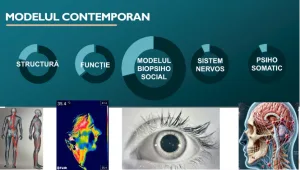
Disfuncția ATM între structură, funcție și emoție: perspectiva prezentată de Dr. Anca Adam la Congresul Internațional de Medicină Tradițională Chineză

Tratament Parodontoza Acasa: Ce Functioneaza si Ce Nu

Tratamentul parodontozei cu laser: cum poate ajuta tehnologia laser în boala parodontală și periimplantită

Din New York la București, în căutarea unui zâmbet care să nu fie de Hollywood. :D
Parestezia după extracția molarului de minte
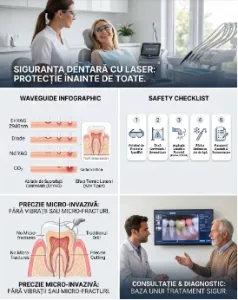
Este sigur laserul dentar?





























 Romanian
 English