
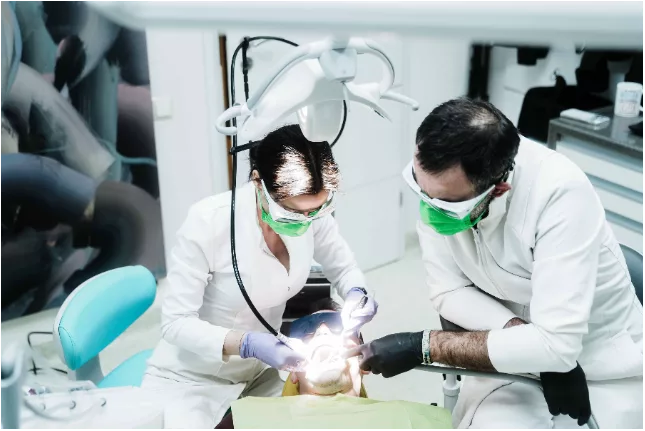
Patients frequently ask why laser treatments are not available in all dental offices and why some doctors do not recommend them.
The answer is not that the laser doesn't work. On the contrary. The reality is much more complex.
One of the biggest confusions is that people imagine there is only one „dental laser.” In reality, modern laser dentistry involves the use of multiple wavelengths, each with different properties and specific indications.
Therefore, when we discuss laser dentistry, we're not discussing one device, but an entire family of technologies.
The cost is only part of the problem
The first reason the laser is not present in all practices is the cost.
Some laser systems represent significant investments, and the equipment is just the beginning. The education, courses, training time, and clinical experience required for proper use are just as important.
Many doctors can learn to use a laser at a basic level. It is much more difficult to deeply understand how each wavelength interacts with tissues and how parameters should be adapted for each clinical situation.
Lasers are changing how we think about medicine.
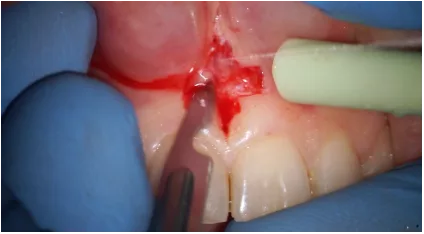
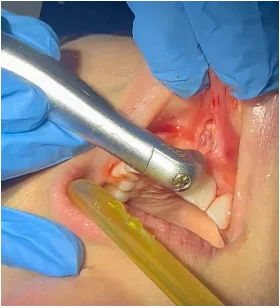
One aspect that is rarely discussed is how the laser completely changes your perspective on certain treatments. Through the lens of the laser, medicine is re-learned, not because classic methods are wrong, but because completely different approaches emerge, allowing for more conservative and less invasive treatments.
Today we can perform procedures without a scalpel, without direct contact with the tissue, and, in certain situations, without a drill.
We can deeply disinfect areas that cannot be reached mechanically and treat tissues without exerting pressure on them. All of this changes the way treatment is conceived.
Education is more important than the apparatus.
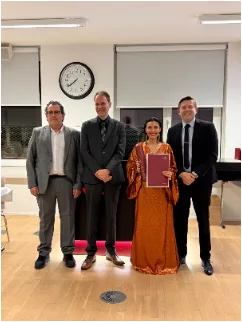
A high-performance laser does not automatically guarantee high-performance results. Each wavelength has its own characteristics, its own indications, and its own limitations. Incorrect parameters or incorrect technique can generate undesirable effects. A laser is not a microwave oven where you press a button and automatically get the desired result. It requires medical knowledge, laser physics knowledge, and clinical experience. In our experience, education is the factor that makes the difference between using a laser and using a laser correctly.
Why can results vary from one practice to another?
Two clinics can have the same device and completely different results. The reason is simple.
Success is not solely determined by the existence of the device, but by understanding how energy is transmitted to the tissue and the physician's ability to constantly adapt parameters according to the clinical situation.
In laser dentistry, experience matters enormously.
What are the benefits for the patient?
When technology is used correctly, patients can benefit from:
- less invasive interventions;
- reduced bleeding in many procedures;
- reduced postoperative edema;
- less postoperative discomfort;
- faster healing in numerous clinical situations;
- additional disinfection beyond conventional methods;
- the possibility of performing certain treatments with reduced anesthesia requirements.
These benefits don't just come from the device itself, but from how it's used.
Conclusion
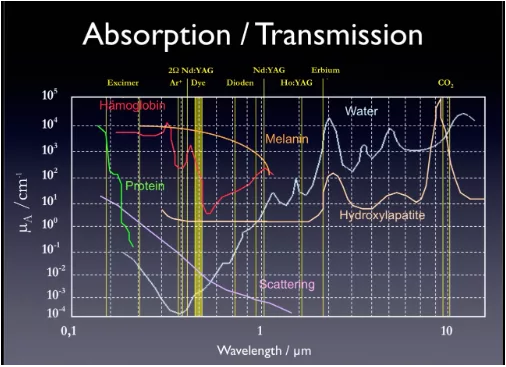
Absorbțof different wavelengthsă laser at the level of the main chromophores șI constituentsți molecular AI țtissues. The different absorption profilețto explaină Interacțspecific issueă a fieldăI'm sorry, I don't understand what you meană to țtissues șI, implicit, indicatețClinical sales. Sourceăeducational materialțInternational Mastership in Laser Therapy in Dentistry, AALZ – Sigmund Freud University Vienna.
Perhaps the most important idea is that laser dentistry is not a single device nor a single wavelength.
Diode lasers and erbium lasers have completely different operating mechanisms and complement each other.
The best results occur when the doctor understands the advantages of each technology and knows how to use the right wavelength for each procedure.
Ultimately, the difference isn't made by the laser, but by the doctor using it.
Programă or consultationțI.e. șand discoveră How modern laser technologies can transform dental treatments!
📍 Innovation Medical Center
Bucharest
📞 0753 666 111
Authori:
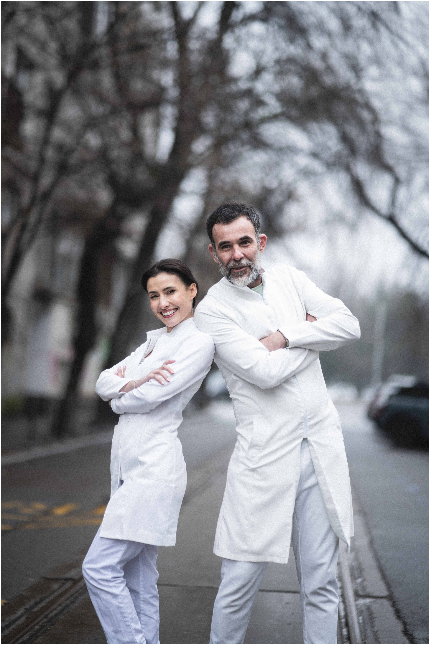
Dr. Nur Saadeddin– Medical dentist within Innovation Medical Center, Co-Founder of Cluj Smile Society, Laser Dentistry Expert, Master of Science – Laser therapy in dentistry (AALZ Aachen & Sigmund Freud University Vienna), Laser Safety Officer (LSO) – AALZ Aachen, trainer in laser therapies, with dedicated activity in prosthetics, periodontology, minimally invasive approaches, and digital dentistry.
Dr. Thomas Mendel– Medical Director and Dentist at Innovation Medical Center, Co-founder Cluj Smile Society, Laser Dentistry Expert, Master of Science – Laser therapy in dentistry (AALZ Aachen & Sigmund Freud University Vienna), Laser Safety Officer (LSO) – AALZ Aachen, trainer in laser dentistry, with dedicated activity in endodontics, periodontics, minimally invasive approaches, and digital dentistry.


















 Romanian
  English