
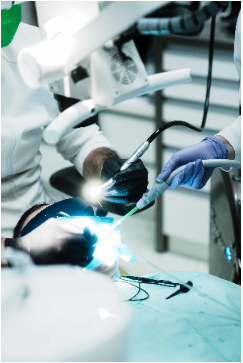
One of the most common situations we encounter is the patient who comes to the office after being recommended for extraction.
Most of the time, the reason is a large infection at the root, an old root canal treatment that failed, extensive damage seen on the x-ray, or significant coronal destruction.
The question is almost always the same:
„Can he still be saved?”
The answer cannot be provided without a thorough clinical and radiological evaluation, but one thing is important to understand: the size of the infection alone does not determine the fate of the tooth.
The infecțBig sea înnamseauă automate extractionțI.e.
Many patients believe that when a large infection appears on an X-ray, the tooth is lost.
In reality, the purpose of endodontic treatment is to eliminate the cause of infection and create the necessary conditions for the body to heal.
In our practice, we have treated and followed cases with lesions up to 2 centimeters that subsequently showed healing and progressive bone regeneration.
We have even treated cases where a dental infection affected the maxillary sinus, and after eliminating the dental cause, the sinus recovered.Vezi cazul – aici).
Presencețof an infectionțI do not representă automatic reason for extractionțfor example.
The important thing is whether the source of the infection can be eliminated and if the tooth can be subsequently rebuilt.
This înnamseauă the infectțAnd soădăDull tooth?
In most situations, bacteria penetrate the tooth and reach the root canal system. These canals contain pulp tissue, blood vessels, and nerve endings. When bacteria colonize these spaces, the body reacts, and an area of inflammation and bone resorption may appear around the root. This is the area that shows up on an X-ray as a lesion. The size of the lesion often reflects the duration and progression of the infection but does not automatically determine if the tooth needs to be extracted.
What types of teethțCan I be savedți înumerous situationsții?
Each case is different, however there are numerous situations in which a tooth recommended for extraction may have an alternative.
Among these are:
- extensive root infections;
- complex endodontic retreatment;
- calcified canals;
- fractured instruments in the canal;
- perforations;
- significant coronary damage;
- sinus involvement of dental origin.
In many of these cases, the correct diagnosis and treatment can allow for the tooth to be saved.
Câand this is extrațit is justifiedă?
There are also situations where extraction is the best solution.
Among these are:
- Vertical fractures with fragment mobilization;
- severe loss of bone support;
- the destruction is so extensive that the tooth can no longer be rebuilt and has no prosthetic value. In these situations, the prognosis is unfavorable regardless of the technology used.
Why do I deserveă a second opinion
One of the most common mistakes is immediately accepting extraction without evaluating all available options.
Not every infection means extraction.
Not every large lesion means extraction.
Not every retreatment is impossible.
Before giving up on a natural tooth, it's worth getting a complete evaluation and a second opinion. In many situations, what seems like a hopeless tooth can still be treated and preserved for many years.
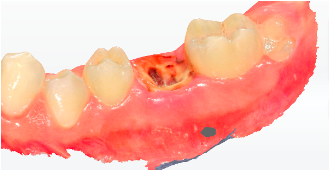
Initial phase – Clinical evaluation of the tooth before treatment, highlighting coronal destruction and existing pathology.
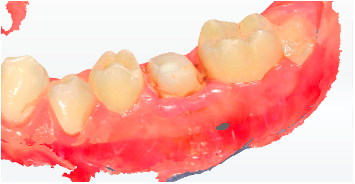
After endodontic treatment and coronal reconstruction – The tooth was endodontically disinfected and obturated, followed by coronal reconstruction to restore structural strength and prepare for definitive restoration.
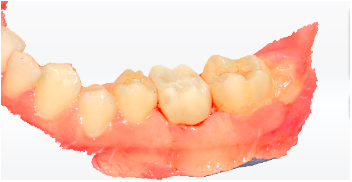
Final stage – Definitive prosthetic restoration, with complete restoration of masticatory function, aesthetics, and biological integrity of the tooth within the dental arch.
Programă or consultationțI.e. și discoveră How modern laser technologies can transform dental treatments!
📍 Innovation Medical Center
Bucharest
📞 0753 666 111
Authori:
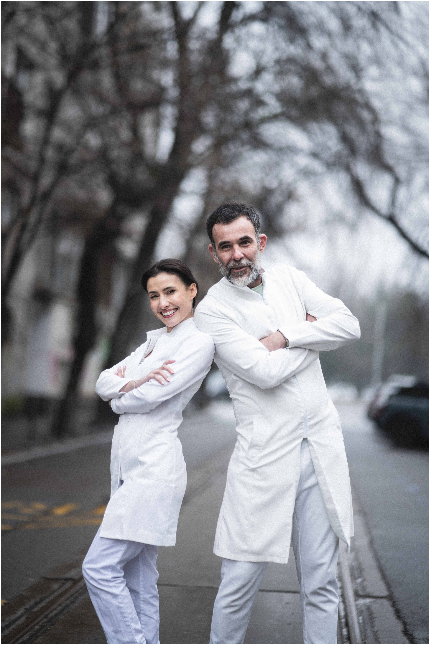
Dr. Thomas Mendel – Director Medical și medic dentist în cadrul Innovation Medical Center, Co-founder Cluj Smile Society, Laser Dentistry Expert, Master of Science – Laser therapy in dentistry (AALZ Aachen & Sigmund Freud University Vienna), Laser Safety Officer (LSO) – AALZ Aachen, trainer in laser dentistry, with dedicated activity in endodontics, periodontics, minimally invasive approaches, and digital dentistry.
Dr. Nur Saadeddin– Medical dentist within Innovation Medical Center, Co-Founder of Cluj Smile Society, Laser Dentistry Expert, Master of Science – Laser therapy in dentistry (AALZ Aachen & Sigmund Freud University Vienna), Laser Safety Officer (LSO) – AALZ Aachen, trainer in laser therapies, with dedicated activity in prosthetics, periodontology, minimally invasive approaches, and digital dentistry.




















 Romanian
  English