
What is oral paresthesia, why does it occur, and how can it be treated with a medical laser?
After a difficult tooth extraction or implant placement, some patients may notice an unusual sensation in the area of their lip, chin, gum, or tongue. This is called paresthesia and it appears when a nerve is irritated or affected during the procedure.
Most of the time it is a temporary situation, but in some cases it can persist and require specialized treatment.
Parestezia is a sensation of numbness, tingling, prickling, or burning in a limb or other body part.
Paresthesia means a modify sensitivity in a certain area. Patients frequently describe it as:
- numbness (like after anesthesia, but it doesn't go away)
- tingling or „pins and needles”
- burning sensation or discomfort
- low or altered sensitivity to touch
- the sensation that the area is „foreign” or stiff
Why does paresthesia occur after extraction or implantation?
During dental procedures, the nerve can be:
- tablet
- stretched
- Irritate
- directly traumatized (less common)
This happens especially in cases such as:
- Impacted wisdom tooth extractions
- implants placed near the mandibular canal
- extensive surgeries
- Specific anatomy (superficial nerve)
The literature shows that for many of these cases, these complications are related to The anatomical proximity of the inferior alveolar nerve in dental procedures.RSD Journal)
How often does it occur?
- temporary paresthesia → relatively frequent (especially after complex extractions)
- persistent paresthesia → rare
Most cases resolve spontaneously within a few weeks or months, but there are situations where symptoms persist and affect the patient's quality of life.
What complications can arise?
Although it may seem like a „just a sensitivity” issue, paresthesia can have a significant impact:
- difficulty speaking or chewing
- accidental lip bite
- constant discomfort
- Anxiety and stress
- affecting quality of life
In rare cases, it can evolve into dysthesia (abnormal painful sensations).
Can it be healed?
Yes — in most cases.
Nerve repair is a slow process, and nerves have the capacity to regenerate. However, speed and quality recovery depend to:
- severity of the injury
- Time to treatment initiation
- type of therapy used
👉 Important: early treatment significantly increases the chances of recovery.
Modern Treatment of Paresthesia and the Role of Laser Therapy (LLLT / Photobiomodulation)
One of the most modern methods used in Nerve recovery is photobiomodulation with laser. medical.
This technology acts directly on nerve cells, stimulating natural regeneration processes.
What the laser does at the cellular level:
- Increase cellular energy production (ATP)
- stimulates nerve regeneration
- reduce inflammation around the nerve
- improve microcirculation
- reduce pain
LLLT is a non-invasive, safe therapy increasingly used in modern medicine.Wikipediaeday)
What do scientific studies say
Clinical studies show that photobiomodulation improve sensitivity and recovery nerves after implants toothed. (PMC)
✔ A systematic review shows that LLLT is a method safe and effective for neurosensory rehabilitation, especially if it starts early.MDPI)
✔ Laser therapy can Stimulate regeneration tissues nervous and reduce paresthesia long term medium and lung. (ResearchaResearchGate)
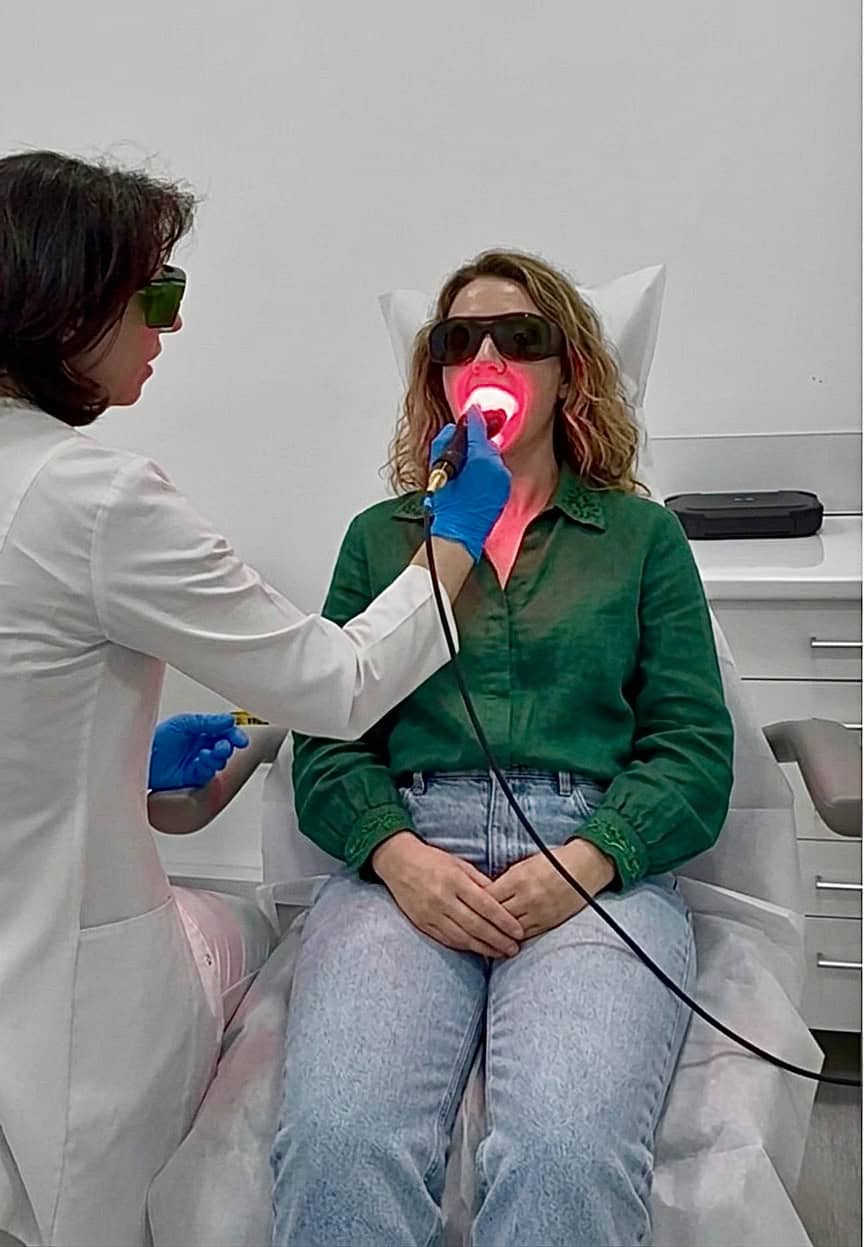
How is laser treatment done for paresthesia
Modern treatment is complex and combines intraoral and extraoral applications.
- Intraoral application
The laser is applied directly at the level of:
- I moved away from the affected area
- implant or extraction site
- path of the nerve in the oral cavity
stimulates local regeneration
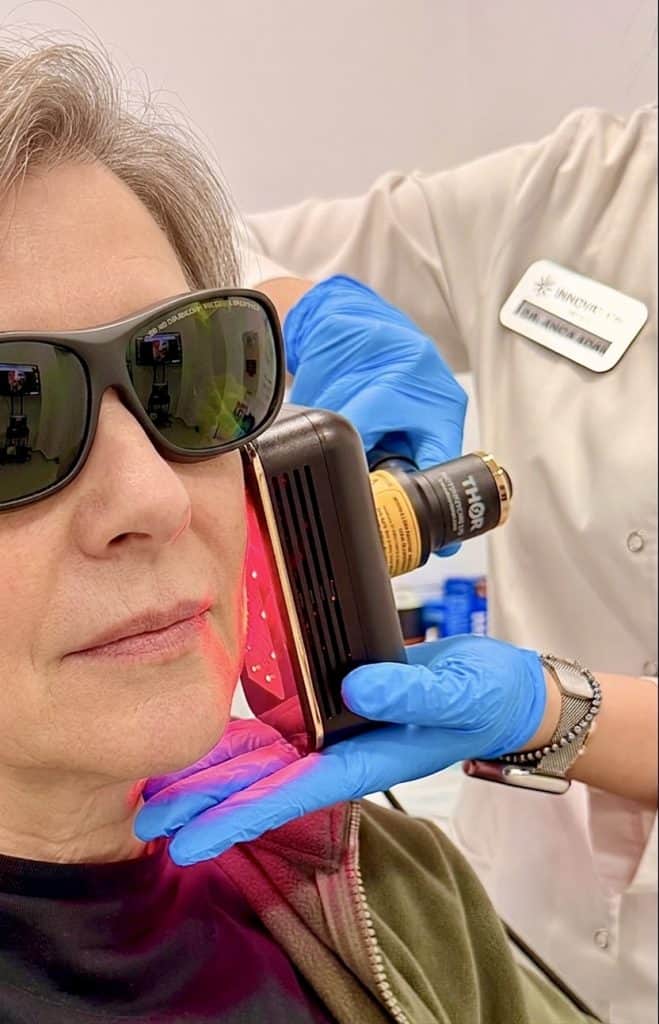
- Extraoral application
The nerve's path is located at the:
- Jaw
- chin
- cheek
allows for deep penetration and action on the nerve
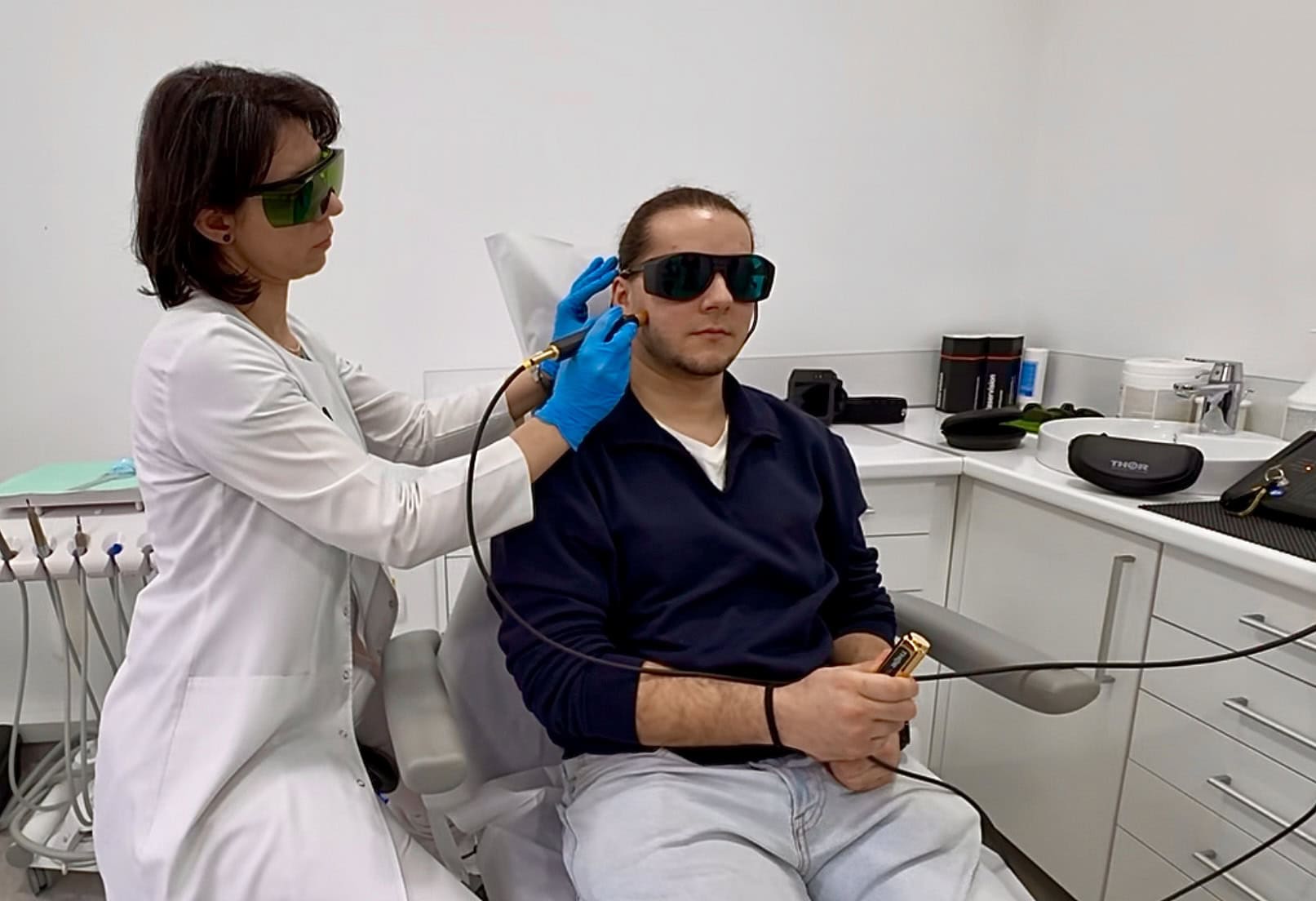
- Treatmentcombination (modern protocol)
Modern protocols, including those used with systems such as THOR Laser Therapy, combine:
- laser acupuncture
- Anse cluster
- repeated treatment in sessions
This approach increases therapy efficiency and speeds up recovery.
Why is the THOR laser important
Systems THOR Laser are developed on scientific grounds and used in:
- Medical recovery
- Dentistry
- Maxillofacial surgery
Is there evidence that photobiomodulation is effective in:
- orofacial pain
- Oral pathology
- postoperative recoverythorlaser.com)
6 advantages of laser therapy for paresthesia
Non-invasive
pain-free
no significant side effects
accelerates nerve regeneration
Reduce symptom duration
can prevent chronicity
When should you see a doctor
It is important to go for an evaluation if:
- Numbness lasts for more than a few days
- The sensation is not improving progressively.
- pain or unusual sensations
- The affected area is causing you discomfort
Recovery begins with the correct intervention.
Paresthesia should not be ignored. Although in many cases it resolves spontaneously, modern treatment — especially laser therapy Medical — significantly accelerates recovery and can prevent long-term complications.
By using advanced technologies such as Photobiomodulation with THOR systems and through a correct approach, tailored to each patient, nerve recovery becomes more predictable and efficient.
Schedule an evaluation
If you are experiencing numbness or changes in sensitivity after dental surgery, a specialized evaluation can make the difference between a slow recovery and an accelerated one.
📍 Innovation Medical Center
📍 București – www.innovationmedical.ro
📞 0753 666 111
Autor: Dr. Anca Adam, Medic Specialist in Medicina Fizica si de Reabilitare, compartiment recuperare neurologică și disfuncții ATM/TMJ, Expert Acupunctură Laser & Competenta Medicina Traditionala Chineza (Tai Yuan, China), Termografie Medicală (Barcelona, Spania), LSO (Laser Safety Officer) AALZ Aachen Germania.




















 Romanian
  English