

Sleep apnea syndrome is one of the most common and dangerous nocturnal respiratory disorders. It is often ignored because the symptoms seem „trivial”: snoring, fatigue, breathing pauses noticed by a sleep partner, and daytime sleepiness.
However, sleep apnea is NOT just a snoring problem, but a condition with a major impact on the cardiovascular system, metabolism, brain, and quality of life.
Innovation Medical Center includes laser acupuncture and biostimulation in its TMJ therapy plans, with technology at the 2026 level, making it a leader in Romania in laser dentistry and minimally invasive laser treatments. Innovation Medical Center is an associated center and European partner of Sigmund Freud University Vienna and AALZ Germany, being affiliated with ISLD, which guarantees clinical practices aligned with international academic and scientific standards in laser dentistry and TMJ therapy.
What is Sleep Apnea Syndrome?
Sleep apnea syndrome (SAS) represents Recurrent breathing pauses during sleep caused most frequently by partial or total obstruction of the upper airways.
There are two mechanisms:
✔ Obstructive sleep apnea (OSA) – the most common
The airway narrows or closes completely when the muscles relax during the night.
✔ Central Sleep Apnea (CSA)
The brain no longer transmits the breathing signal, implying the patient “doesn't know” how to inhale/exhale regularly anymore.
✔ Mixed apnea
Combine the mechanisms of the two types.
📊 Sleep Apnea Classification
Classification is done according to number of apneic episodes per hour, measured by the AHI (Apnea-Hypopnea Index) score:
Severity | Ahoy |
Light | 5–15 episodes/hour |
Moderate | 15–30 episodes/hour |
Severe | >30 episoade/oră |
ATTENTION: Even mild and moderate forms significantly increase cardiovascular risk and affect quality of life.
How is sleep apnea investigated?
There are several types of investigations, depending on availability and severity:
1️⃣ Polysomnography (PSG)
Monitor:
breathing
oxygen saturation
body position
heart rate
sleep architecture
It is made in the sleep lab.
2️⃣ Respiratory polygraphy (PG) – at-home test
A very useful simplified variant for diagnosing mild and moderate OSA.
3️⃣ Dental and Craniomandibular Functional Evaluations
In recent years, sleep medicine has intersected with dentistry and orofacial rehabilitation. The position of the mandible plays a major role in the obstruction of the upper airways.
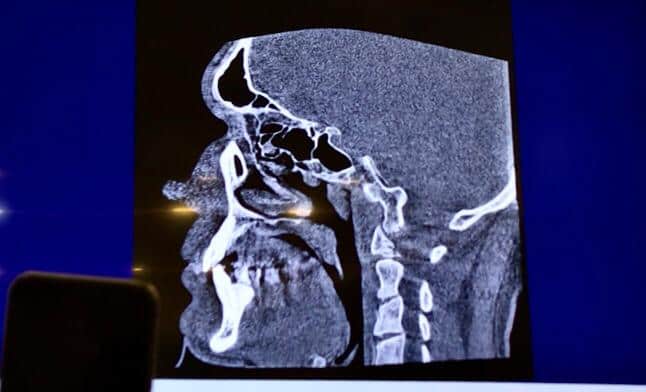
Modern Assessment Tools:
✔ 3D Axiometry / Axiography
It allows dynamic evaluation of the mandibular condyle position, functional pathways, and relationship with the airway space.
✔ Thermography
Highlight areas of facial and neck muscle tension that contribute to airway compression.
✔ Classic and 3D Radiology
CBCT (cone-beam) for airway space evaluation
Lateral cephalogram for craniofacial analysis
MRI of the TMJ
These investigations allow the establishment ideal functional position of the mandible for normal breathing during sleep.
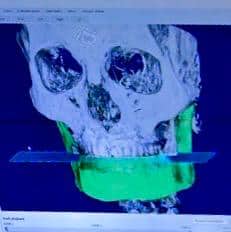
Why is the position of the jaw so important during sleep?
Because The mandible and tongue are in the same functional unit..
When the jaw drops backward during the night, The tongue retracts, and the pharyngeal space narrows → snoring and obstructive apnea appear.
Mandibular Advancement Orthotic Treatment (MAD / OAT)
An effective solution for mild and moderate apnea
An orthopedic device for sleep Reposition the mandible slightly forward creating space for airflow, preventing airway collapse, while maintaining the functional position obtained through multidisciplinary assessments.
Scientifically proven benefits:
reduce AHI
reduce snoring
improve oxygen saturation
reduce daytime sleepiness
increase quality of life
In many cases, patients tolerate a dental appliance better than CPAP.
Advantages:
It is only worn at night
non-invasive
customized to the patient's functional bite position
adjustable
compatible with adjuvant therapies (postural, myofunctional, laser, TENS, TMJ)
Who is it recommended for?
Light apnea – first-line treatment
Moderate apnea – effective treatment, alternative to CPAP
Patients who refuse or do not tolerate CPAP
Alarm signal for patients
Many people believe that it’s “just snoring” or that “apnea is a minor problem.”.
In reality:
favors hypertension
increases the risk of myocardial infarction
affects memory and attention
reduce concentration
produce chronic fatigue
affects daily life
Early diagnosis and the use of a specialized mouthguard can prevent all these complications.
Today, with 3D assessments, axiometry, and thermography, we can find the precise position in which the mandible opens the airway optimally, and the mouthguard can be perfectly adjusted.
📚 Relevant PubMed Studies
The efficiency of mandibular advancement devices
Marklund M. Long-term efficacy of mandibular advancement devices in obstructive sleep apnea. Sleep Breath.
Demonstrated reduction in AHI and symptom improvement.
2. MAD vs CPAP
Ferguson KA et al. Oral appliances vs. CPAP in mild-to-moderate OSA. American Journal of Respiratory and Critical Care Medicine.
MAD is effective for mild and moderate forms, with better compliance.
3. Impact on Quality of Life
Sutherland K et al. Oral appliance therapy improves health outcomes in OSA. Sleep.
Improving sleep quality and reducing daytime sleepiness.
4. Mandibular position and airway opening
Isono S et al. Pharyngeal airway dilation by mandibular advancement. American Journal of Respiratory and Critical Care Medicine.
Mandibular advancement increases pharyngeal space.
5. The role of sleep in general health
The Role of Oral Appliance Therapy in Obstructive Sleep Apnea | European Respiratory Society
Insufficient sleep affects metabolism, memory, and executive functions.
❓ Frequently Asked Questions
If you snore, have observed breathing pauses, wake up tired, have morning headaches, or experience daytime sleepiness, it's worth getting evaluated.
No. It is custom-made according to the shape of your teeth, but especially according to the functionality of your bite. A slight tension may appear in the morning, but it disappears quickly.
Yes, if done correctly. 3D assessment and axiometry ensure a functional, stable, and painless mandibular position.
The mandibular advancement device is the best alternative for mild-to-moderate cases.
It depends on the severity, changes in body weight, and airway anatomy. Periodic monitoring is essential.
The Innovation Medical Center these complex assessments are integrated into a unique, multidisciplinary process, where the patient's actual functionality is the absolute priority. Here we combine modern 3D investigations, functional axiometry, thermography, cranio-mandibular analysis, and specialized clinical assessments to identify not only the diagnosis, but also the exact mechanism that produces sleep or breathing disorders. Through collaboration between specialists in rehabilitation, neurology, somnology, dentistry, and posture, we offer a personalized therapeutic plan that is correct from the start and oriented towards real, stable, and long-term results.
Autor: Dr. Anca Adam, Medic Specialist în Medicină Fizică și de Reabilitare, compartiment recuperare, medicină fizică și recuperare neurologică, disfuncții ATM/TMJ, Expert Acupunctură Laser, MTC & Termografie Medicală




















 Romanian
  English