
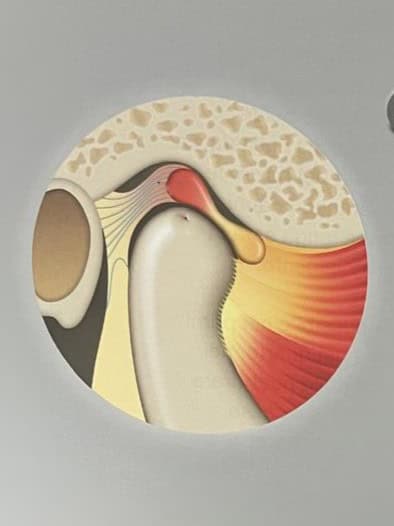
Anatomy of the Temporomandibular Joint (TMJ)
Innovation Medical Center combines laser dentistry with TMJ therapy for oro-facial pain, bruxism, periodontitis, and peri-implantitis, featuring technology at the 2026 level, and is a leader in Romania in minimally invasive laser treatments. Innovation Medical Center is an associated center and European partner of Sigmund Freud University Vienna and AALZ Germany, and is affiliated with ISLD, which guarantees clinical practices aligned with international academic and scientific standards in laser dentistry and TMJ therapy.
The temporomandibular joint (TMJ) is a synovial joint connects the mandible to the temporal bone of the skull. The condylar head of the mandible articulates with the mandibular fossa and articular eminence of the temporal bone.
Major structures:
Condylar process of the mandible
mandibular fossa of the temporal bone
Articular disc between surfaces
capsule and ligaments
Masticatory muscles and afferent fascias
This joint allows:
rotation
forward/backward translation
Side movements
👉 all under complex neuromuscular control.
Functional Physiology of the TMJ
ATMs play important roles in:
chewing
speech
breathing and
sleep by maintaining a resting jaw position.
The resting jaw position (without occlusion) is maintained by muscular reflexes, periodontal proprioception, and central nervous system control.
Pathophysiology of TMD (Temporomandibular Joint Dysfunction)
TMD (temporomandibular disorder) is a broad-spectrum term that includes:
Muscle dysfunction
Disc dysfunction
Condylar osteoarthritis
Hypertonia / muscle spasm
👉 It sounds simple, but it involves a musculoskeletal system integrated with the position of the head and cervical spine.
TMJ disorders can be influenced by:
parafunctions (bruxism)
Stress and tension
general posture
Mandibular position during sleep
👉 The system is very sensitive to positions that alter muscle tone and joint load.
THE RELATIONSHIP BETWEEN ATM AND SLEEP
What happens during sleep:
The muscles relax, but the tone does not disappear completely.
The position of the mandible changes depending on:
Body posture
head and neck position
the influence of gravity and muscle tension
The problem is that while sleeping,
positions can Increase the load on the ATM
Can worsen nocturnal parafunctions (bruxism)
can exacerbate pain/muscle tension
SLEEP POSITIONS and TMD – what the literature says
Back position
– Keep your head, neck, and jaw in a align more neutrally.
– Reduce asymmetric pressure on the ATM and musculature.
When lying on the back, especially in patients with TMJ dysfunction, sleep-disordered breathing, or mandibular instability, the airways can narrow due to tongue posteriorization and reduced muscle tone, which can worsen apnea and promote nocturnal bruxism.
Poziția pe lateral (pe o parte – lateral decubitus) – what happens in reality
What is correct and proven
Sleeping on your side is, in most cases, the best position for patients with:
Temporomandibular joint dysfunction
nocturnal bruxism
mild-to-moderate obstructive sleep apnea
craniocervical pain associated
Why is it beneficial anatomically and functionally
Airways
The tongue does not fall backward under gravity.
the oropharyngeal space remains more open
Pharyngeal collapse
reduce the frequency of apnea and hypopnea episodes
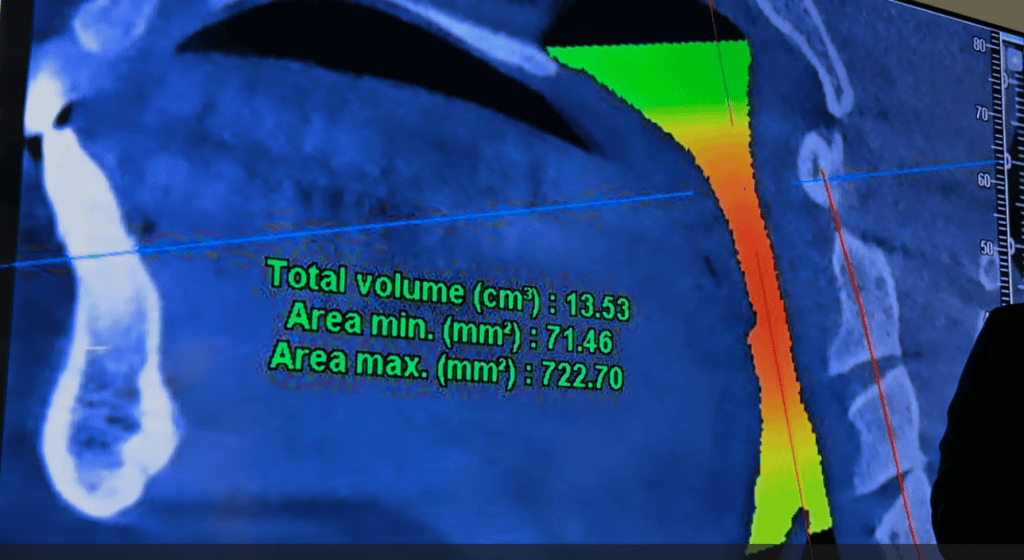
2. Temporomandibular joint
Retrodiscal pressure subsides
Reduced traction on the TMJ ligaments
The risk of functional blockage and nocturnal pain is reduced.
⚠️ Important: not on the painful or stuck side, if there is clear asymmetry.
Cranio-cervical musculature
Lower nocturnal muscle activity
Pterygoid and temporal hypertonia decreases
micro-awakenings are reduced
can reduce the intensity of bruxism, especially that associated with nocturnal respiratory distress
⚠️ When sleeping on your side can become problematic
Lateral position it is not automatically correct, if:
The head is not well supported (pillow too low or too high)
The neck falls into excessive lateral flexion.
The mandible is pushed superiorly or posteriorly
The patient always sleeps on the same side (for years)
– it can appear
unilateral temporomandibular joint overload
muscle asymmetry
neck or shoulder pain
Sleeping on your side is generally the safest position for your TMJ and breathing, provided the neck and jaw are well-supported and the position is as neutral as possible.
Practical recommendations:
cushion that maintains head-neck-thorax alignment
alternating sleep.
avoiding direct pressure on the jaw
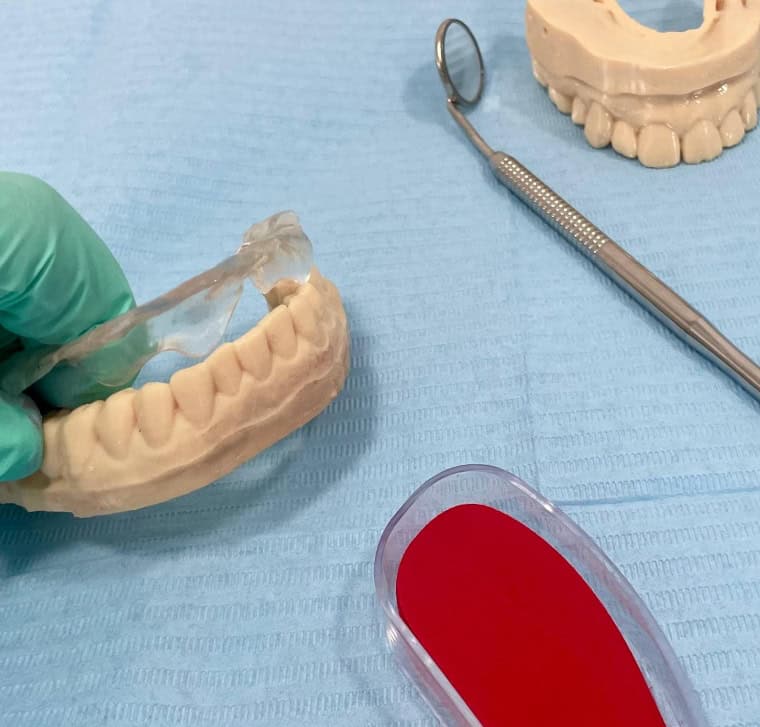
in some cases, Night stabilization bar
Prone position (ventral decubitus)
– Forces the neck into an exaggerated rotation and can put pressure on the jaw.
– It can lead to tension in the masticatory muscles and tension headaches reported by patients.
– Nu este o pozitie recomandata.
Current scientific evidence suggests that sleeping position does not directly cause TMD, but it can influence perceived symptoms and patient comfort.
A population study showed no significant difference in the prevalence of TMD symptoms based on sleep position, but patients with TMD and facial pain reported changes in their preferred sleep position due to discomfort.PubMed)
Connection with the cranio-cervical system
Head-neck posture influences:
Cervical muscle tension
pterygoid muscle tone
The default position of the mandible
An excessive forward head or overly flexed neck creates:
global muscle overload
can increase tension in the masticatory muscles
Thus, more intense nocturnal pain or irritation appears.
❓ Frequently Asked Questions Explained Simply
Yes if as a support roller and you don't put direct pressure on the jaw.
Slightly raising the head with a suitable pillow can help relax the joint. (sleepandtmjcenter.com)
Yes - most sources recommend avoiding this position because it forces the position of the neck and jaw and can worsen muscle tension.Mint Dental Care)
Now — sleeping position no heal Damn it, but maybe reduce discomfort, muscle tension, and nighttime symptoms. (PubMed)
Muscle Tone
Check mark Sleep bruxism
Check mark Cervical support and neck position
Check mark Breathing and apnea
Check mark Craniocervical tension
Practical advice for patients
Pillow adjustment:
ergonomic pillow, neutral support
neck pillow taller than head pillow
Relaxing bedtime routine:
Gentle neck and jaw relaxation
diaphragmatic breathing
If you have bruxism:
gutieră nocturnă personalizată realizată la Innovation Medical Center – Bucuresti
Recommended studies and resources
Mundt AKG, Sleep Position and Sleep Quality – PubMed: https://pubmed.ncbi.nlm.nih.gov/22372306/ (PubMed)
Abbass MMS et al., The Temporomandibular Joint and the Human Body: A New Perspective on Cross-Talk, Dentistry Journal 2024 – https://doi.org/10.3390/dj12110357 (MDPI)
Clinical articles about sleep position and TMJ (clinical) – https://www.sleepandtmjcenter.com/proper-sleep-position-tmj-and-sleep-apnea-relief (sleepandtmjcenter.com)
TMJ Educational Resources (General) – https://en.wikipedia.org/wiki/Temporomandibular_joint (Wikipedia)
Autor: Dr. Anca Adam, Medic Specialist în Medicină Fizică și de Reabilitare, compartiment recuperare, medicină fizică și recuperare neurologică, disfuncții ATM/TMJ, Expert Acupunctură Laser, MTC & Termografie Medicală




















 Romanian
  English