
One of the most difficult decisions in dentistry is choosing between extracting a tooth and attempting to save it.
Many patients are recommended extraction and believe there are no other options.
In reality, the decision must be made based on the cause, the condition of the tooth, and the possibility of its long-term reconstruction.
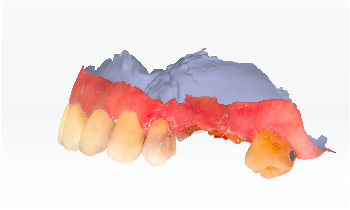
Figure 1 – Initial Phase The tooth presented with severe coronal destruction, extending to the gum line, with almost complete loss of coronal structure and a guarded prognosis prior to treatment initiation.
Infection is not an automatic reason for extraction.
One of the most common situations is recommending extraction due to a large infection.
In most cases, the goal of treatment is to eliminate the infection, not the tooth.
As long as the cause can be treated and the tooth can be rebuilt, extraction is not always the first option.
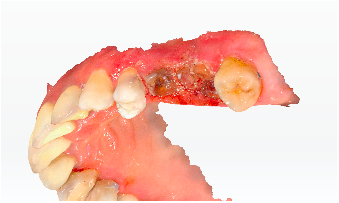
Figure 2 – After endodontic treatment After laser-assisted endodontic treatment, the root remnants were decontaminated and cleaned, creating a favorable biological environment for subsequent tooth reconstruction.
A fractured instrument in the canal does not necessarily mean the tooth must be extracted
Endodontic instruments are very fine and, in certain situations, can fracture inside the canal.
This complicates treatment, but it is not automatically an indication for extraction.
Depending on the location and clinical situation, it is possible to remove, bypass, or controllably integrate the fragment into the treatment plan.
Calcified canals can be treated
Over time, some root canals narrow or partially close due to mineral deposits. These situations are known as calcified canals. Treatment is more difficult, but the presence of calcifications does not automatically indicate that extraction is necessary.
Perforations don't always mean tooth loss
A perforation represents the appearance of an unwanted communication between the canal and the tissues around the root. Depending on the location, size, and time of diagnosis, numerous perforations can be treated.
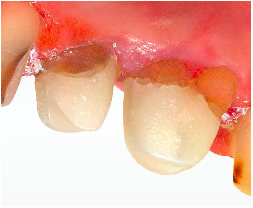
Figure 3 – Coronoradicular reconstruction Coronoradicular reconstruction was performed with a post and core system and a biocompatible material, ensuring the necessary retention and support for the definitive prosthetic restoration.
Major coronary destruction does not always mean extraction
Sometimes patients present with teeth severely destroyed by decay or fractures.
Even when the destruction is extensive, including subgingival, the evaluation must determine if predictable reconstruction is possible.
As long as there is sufficient tooth structure and the prosthetic prognosis is favorable, saving the tooth may be possible.
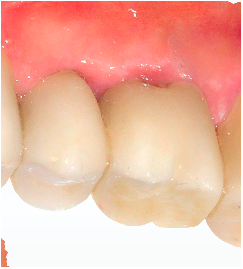
Figure 4 – Final Restoration The final appearance after cementation of the definitive crown, with the restoration of masticatory function, aesthetics, and the structural integrity of the tooth.
When is extraction truly necessary?
However, there are situations where saving the tooth is no longer predictable.
The most common are:
- Vertical fractures with fragment mobilization;
- Severe loss of bone attachment;
- damage so extensive that the tooth can no longer support a prosthetic restoration.
In these situations, extraction might be the right solution.
The natural tooth remains the first option
The goal of modern dentistry is to preserve the natural tooth whenever possible and predictable.
Therefore, before accepting extraction, a complete evaluation is important to determine if there is a real alternative treatment.
In many cases, the answer is yes.
Schedule a consultation and discover how modern laser technologies can transform dental treatments!
📍 Innovation Medical Center
Bucharest
📞 0753 666 111
Authori:
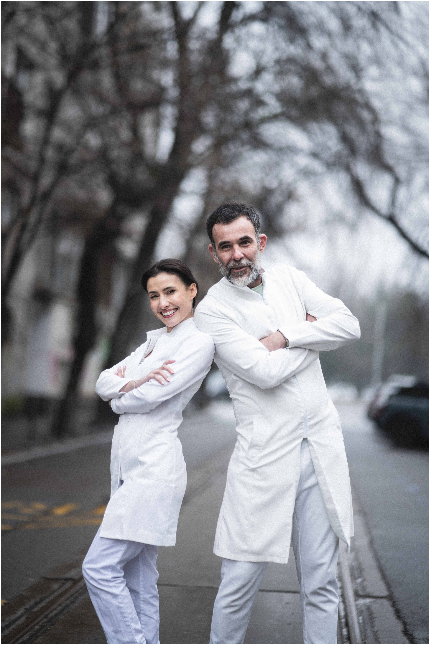
Dr. Thomas Mendel – Director Medical și medic dentist în cadrul Innovation Medical Center, Co-founder Cluj Smile Society, Laser Dentistry Expert, Master of Science – Laser therapy in dentistry (AALZ Aachen & Sigmund Freud University Vienna), Laser Safety Officer (LSO) – AALZ Aachen, trainer in laser dentistry, with dedicated activity in endodontics, periodontics, minimally invasive approaches, and digital dentistry.
Dr. Nur Saadeddin– Medical dentist within Innovation Medical Center, Co-Founder of Cluj Smile Society, Laser Dentistry Expert, Master of Science – Laser therapy in dentistry (AALZ Aachen & Sigmund Freud University Vienna), Laser Safety Officer (LSO) – AALZ Aachen, trainer in laser therapies, with dedicated activity in prosthetics, periodontology, minimally invasive approaches, and digital dentistry.




















 Romanian
  English