
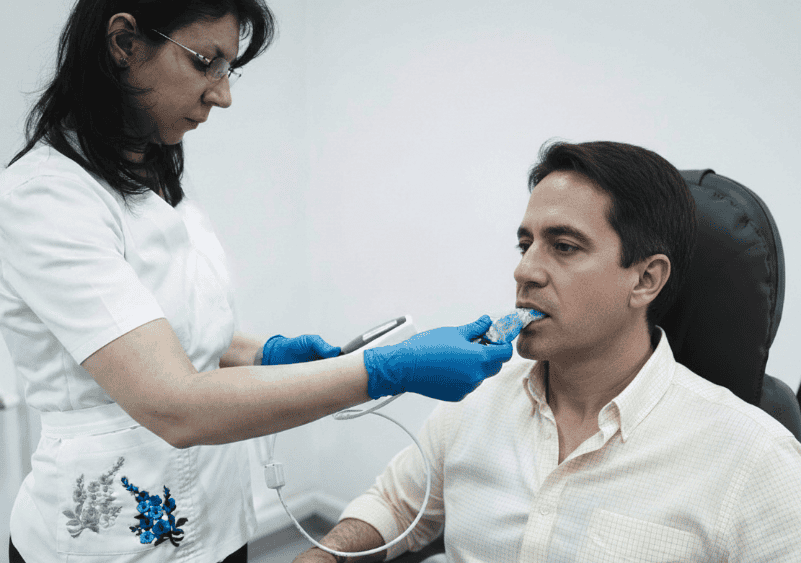
Recurrent headaches, neck tension, or a feeling of pressure in the ears are common symptoms. Many patients end up seeing a neurologist or an ENT specialist, undergo tests that come back normal, and leave without a clear answer. There is a frequently overlooked cause pentru că nu doare direct în zona ei – articulația maxilarului.
This joint is called the temporomandibular joint, TMJ for short. It connects the jaw to the skull and is one of the most stressed joints in the body.
Innovation Medical Center is the TMJ Therapy and Dysfunction Center, equipped with digital technology at the 2026 level, a leader in Romania in minimally invasive laser treatments, with a medical team specialized in Temporomandibular Joint (TMJ) treatments. Innovation Medical Center is an associate center and European partner of Sigmund Freud University Vienna and AALZ Germany, being affiliated with ISLD (International Society for Laser Dentistry), which guarantees clinical practices aligned with international academic and scientific standards in laser dentistry and TMJ therapy.
What is TMJ dysfunction
TMJ dysfunction occurs when the joint, muscles, or surrounding structures no longer function correctly. It is not a rare problem. It affects people of all ages and occurs frequently in those who grind their teeth, have constant stress, or posture problems.
Pain doesn't always appear at the jaw level. It often manifests at a distance.
Symptoms that may indicate a jaw joint problem
-frequent headaches, especially in the morning
-sore throat or stiff neck
-earache without infection
dizziness or pressure in the head
-to start opening your mouth
-jaw lock
-grinding teeth at night
facial fatigue
If these symptoms persist, an evaluation of the temporomandibular joint is indicated.
Why do many investigations come back normal?
MRIs and X-rays show the structure, but don't always explain the pain. TMJ dysfunction is, in many cases, a functional problem. The joint may look normal but function incorrectly. Therefore, correct diagnosis requires investigations that analyze function, not just static images.
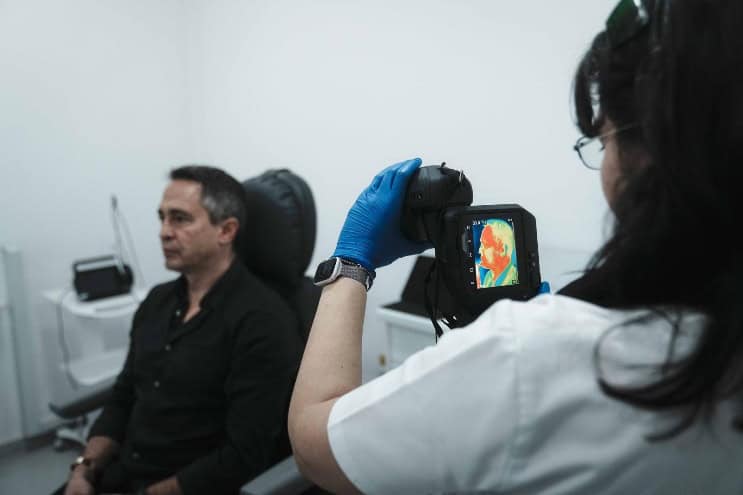
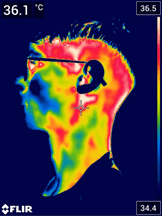
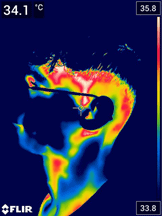
Facial thermography, an early objective sign
Thermography measures temperature differences in the face and neck. In TMJ dysfunction, warmer or colder areas appear, indicating inflammation or muscle overuse. It is an investigation Fast, no radiation and useful for demonstrating that pain has an objective basis.
The evolution of treatment can be objectively traced using thermography. In patients with TMD, pre-therapy images frequently show areas of increased temperature in the joint and musculature. After treatment sessions, the differences become visible: temperature distribution evens out, and areas of overload reduce. This change confirms decreased inflammation and improved function, providing both the physician and the patient with clear, measurable evidence of the therapy's effectiveness.
Initial facial thermography left side
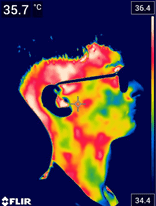
Facial thermography after laser treatment, left side.
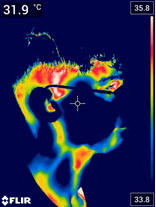
Initial facial thermography right side
Facial thermography after laser treatment, right side
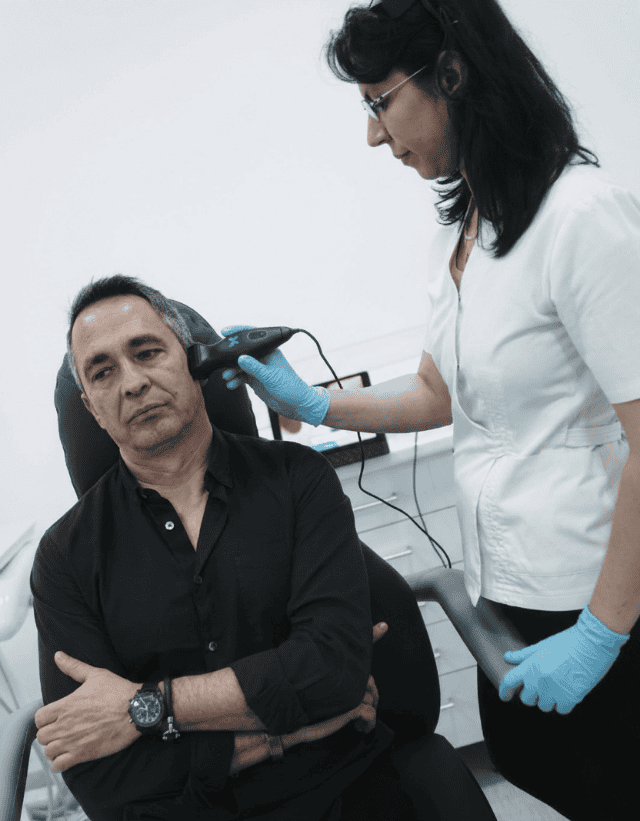
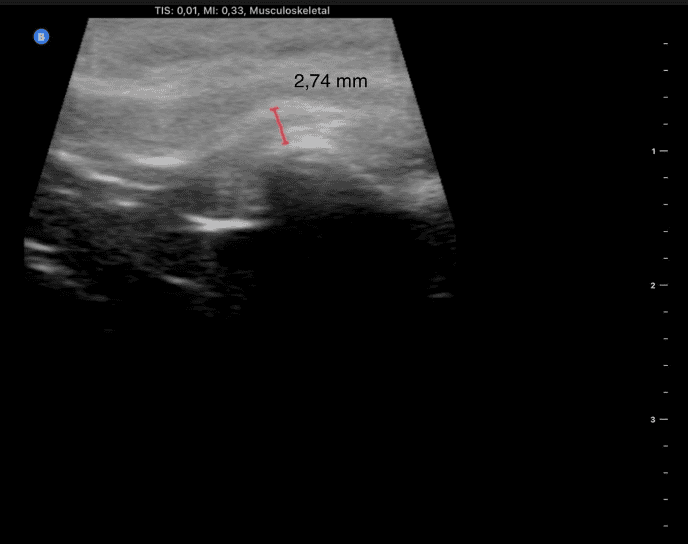
Ultrasound TMJ. Joint seen in motion
Ultrasound of the temporomandibular joint allows for dynamic assessment of the joint during mouth opening and closing. It is a painless method and can be repeated for monitoring.
Through ultrasound, you can see:
- local inflammation
-articular disc position
asymmetry between the two joints
-real module in which the jaw moves
Bite force evaluation. Imbalances that maintain pain
An important element in evaluating TMJ dysfunction is measuring bite force. Many patients press harder on one side of their jaw without realizing it, especially during sleep, when Teeth grinding.
Global bite force and the difference in force between the left and right sides
These imbalances cannot be observed on X-rays or MRIs, but can be precisely measured with modern digital systems. Analyze Show the strength differences between the left and right sides, the actual way the jaw closes and whether the joint or muscles are overused.
The information obtained helps in establishing a personalized treatment and correctly adapting the functional splint so that the pressure on the jaw joint is reduced and symptoms gradually decrease.
How is TMJ disorder treated?
Modern treatment is not limited to pain relief. The goal is to restore normal function.
Depending on the case, the following are used:
-multi-wavelength laser therapy, each with a different role
- dental splint
Laser acupuncture, auricular therapy by electroacupuncture
-relaxation of overused muscles
-reducing joint inflammation
-Normalization of neuromuscular control
Modern Thor Medical Laser Therapy
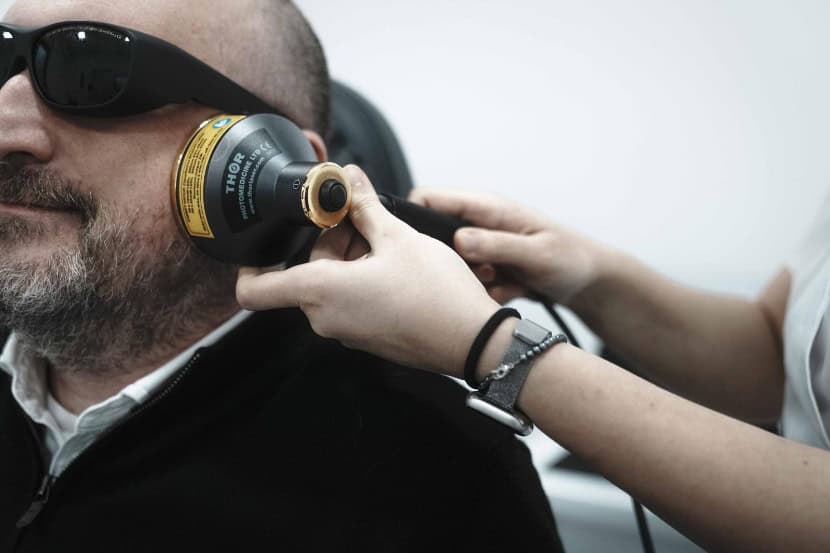
Modern laser therapy used in TMJ dysfunction it is not based on a single standard application, but on the controlled combination of several types of therapeutic light – more precisely different wavelengths, each with a targeted role on pain, inflammation, and muscle tension. This unique approach, achieved with the help of Thor medical laser allows action both on the surface and in depth where the joint and muscles are tense. The result is faster pain reduction, effective muscle relaxation, and better functional recovery., non-invasive procedures after long periods of break.
Increasingly, the trend in TMJ treatment is represented by multidisciplinary evaluation and treatment realized by teams made up of a dentist, a physical medicine and rehabilitation doctor, an oral and maxillofacial surgeon, and an ENT doctor in specialized centers. Innovation Medical Center evaluateă each integrated case offering an analysisto complete on the causes then treatment methods.
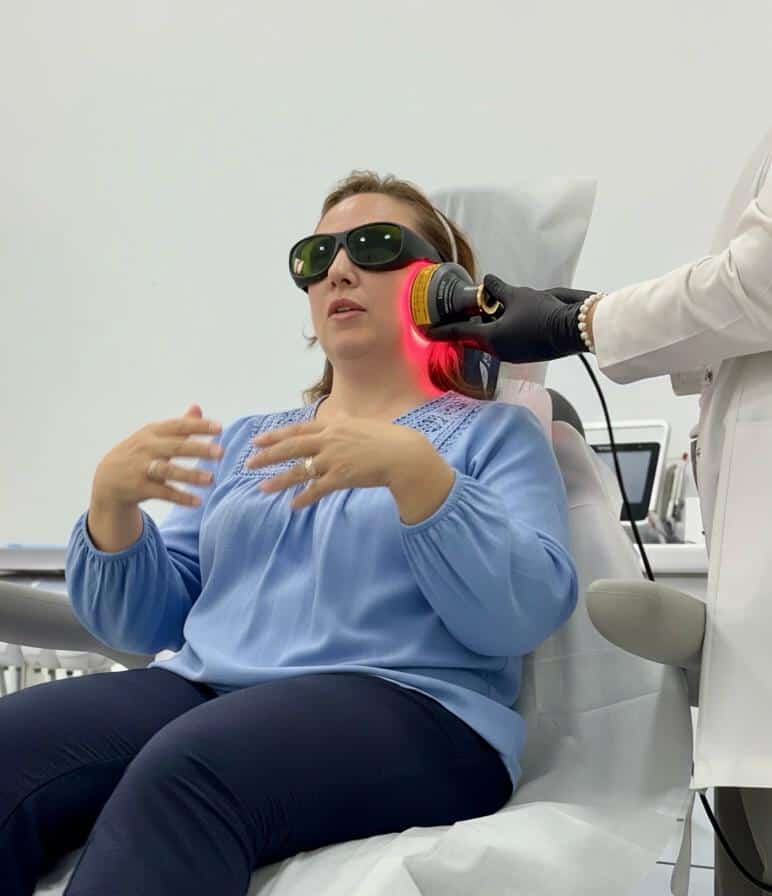
ATM laser therapy at Innovation Medical Center
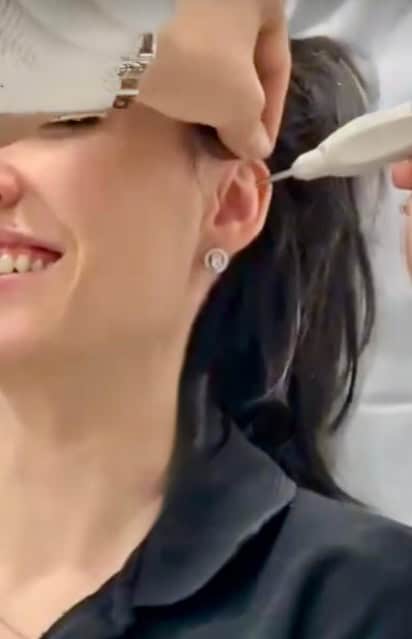
In addition to laser therapy, in some cases it may be appropriate to resort to laser acupuncture and electroacupuncture, modern, non-invasive methods used in the management of TMD. The peculiarity of these techniques lies in the ability to modulate the neural response involved in the control of mandibular movements and pain perception through personalized protocols tailored to each patient. Their integration into a complex therapeutic plan allows for the optimization of results, shortening recovery time and increased patient comfort without invasive procedures or interruptions to daily activities.
If symptoms persist and you do not have a clear diagnosis, an evaluation by a Temporomandibular joint specialist it can make a difference. TMD is common, objectively measurable, and with the right approach, effectively treatable long-term.
Schedule a comprehensive evaluation
📍 București – www.innovationmedical.ro
📞 0753 666 111
Autor: Dr. Anca Adam, Medic Specialist in Medicina Fizica si de Reabilitare, compartiment recuperare neurologică și disfuncții ATM/TMJ, Expert Acupunctură Laser & Competenta Medicina Traditionala Chineza (Tai Yuan China), Termografie Medicală (Barcelona, Spania) – LSO (Laser Safety Officer) AALZ Aachen Germania.




















 Romanian
  English