
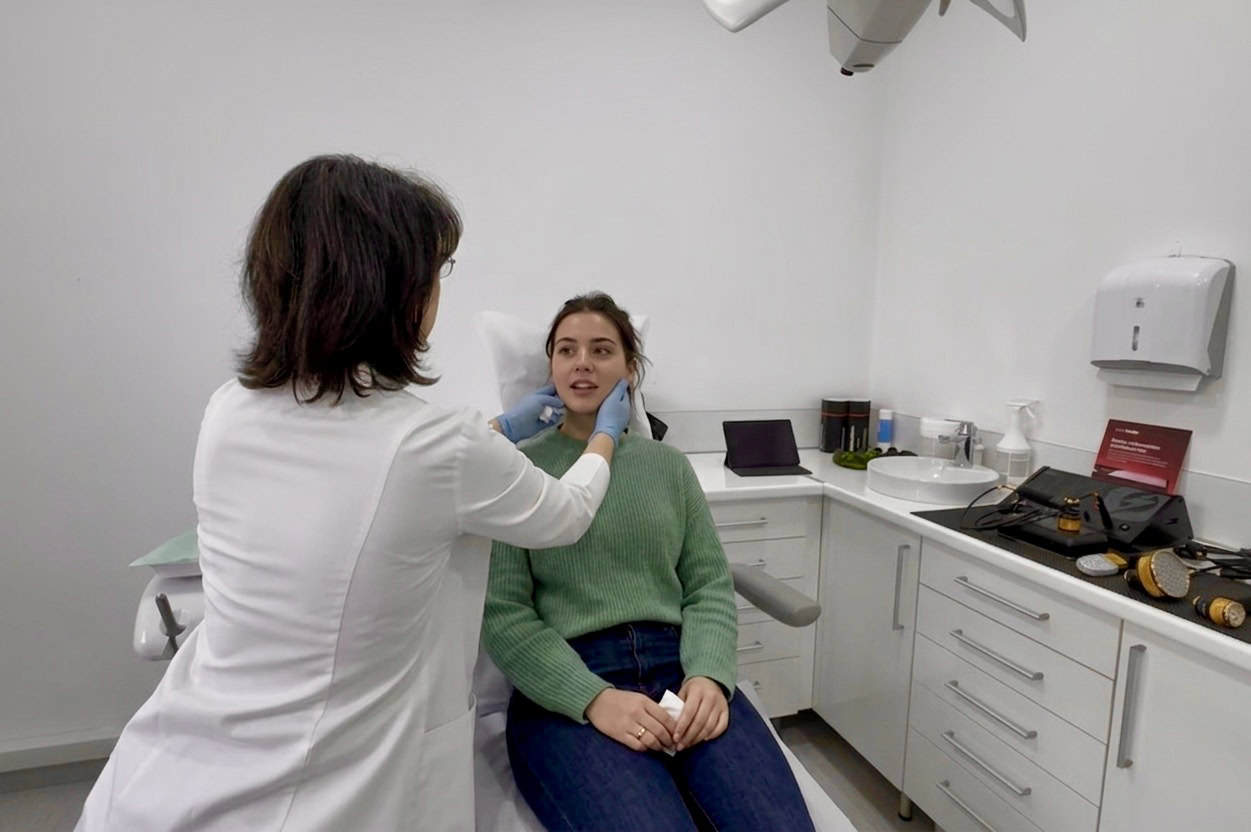
Orthognathic surgery is a complex intervention that corrects the position of the jaw and mandible, with a major impact on facial function and aesthetics.
After surgery, many patients notice a sensation of numbness in the lip, chin, or sometimes the tongue. This is not a rare complication, but rather part of the sensorineural recovery process.
Why does numbness occur after orthognathic surgery?
During the intervention, the surgeon works in close proximity to particularly important nerve structures. During osteotomies (e.g., BSSO) the nerve can be:
- tablet
- stretched
- Irritate
- So, rare, traumatized directly
The result is a postoperative paresthesia, meaning a temporary change in sensitivity.
What does the patient feel (in plain language)?
Patients frequently describe:
- numbness (as after anesthesia)
- tingling
- burning sensation
- modified sensitivity
- The sensation that the lip or chin „does not belong to them”
These symptoms are normal in the first few weeks after surgery, and Recovery can be accelerated with laser therapy latest generation.
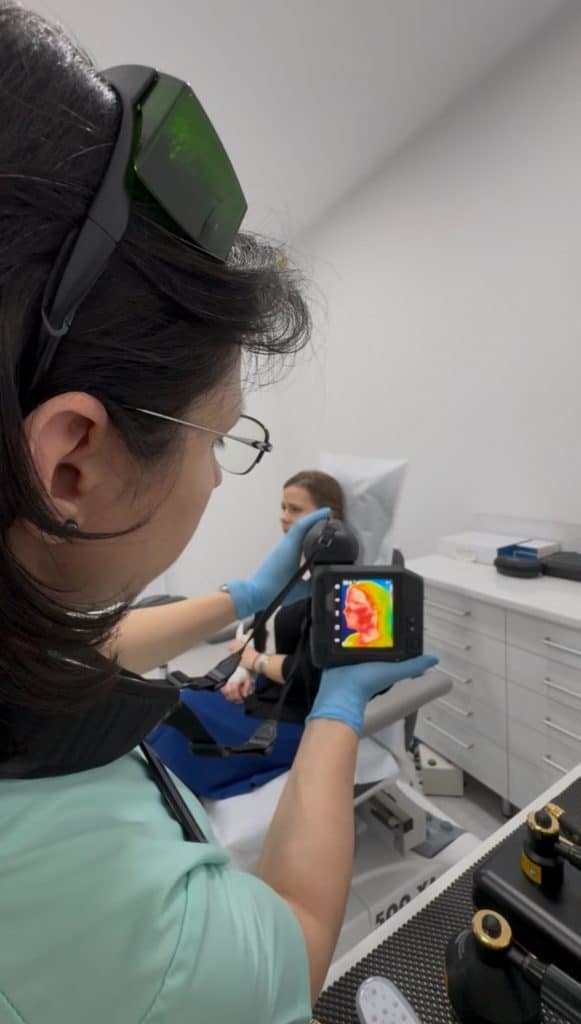
Is this normal? Is it recovering?
Yes — in most cases. The literature shows that:
- Paresthesia is common after orthognathic surgery
- most patients regain their sensitivity progressively
- Recovery can take from a few weeks to a few months.
Important: nerve regeneration is slow
What happens at the nerve level?
Think of a nerve as an „electrical cable.”.
After surgery:
- The signal is interrupted or slowed down
- numbness
- in the recovery phase → tingling appears
These are signs that the nerve is starting to heal
How can recovery be accelerated?
Nerve recovery should NOT be left solely to „the passage of time.” Modern medicine uses Laser photobiomodulation (LLLT) to accelerate regeneration.
What is photobiomodulation?
It is a medical laser therapy that:
- It doesn't hurt
- It is not invasive
- It does not affect tissues
The tooth stimulates the natural healing processes
What does scientific literature say
Recent studies show that laser therapy:
accelerates nerve regeneration
improves sensitivity
reduce postoperative inflammation
✔ how long do paresthesias last
FPhotobiomodulation is one of the most effective modern methods of neurosensory recovery after orthognathic surgery
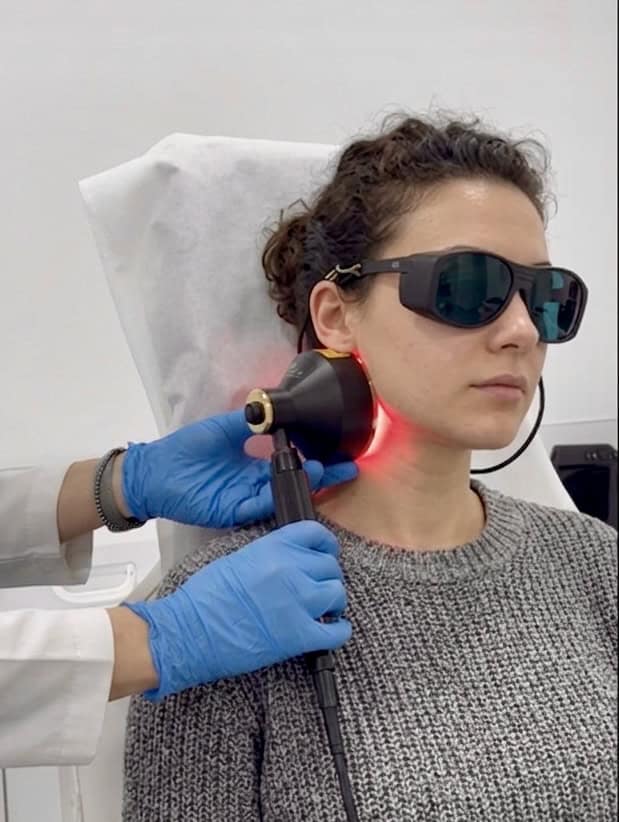
How does a laser work?
At the cellular level:
- increases ATP production (cellular energy)
- stimulates axonal regeneration
- reduce perineural inflammation
- improve circulation
Practice: helps the nerve to regenerate faster and more correctly
Modern treatment protocol after orthognathic surgery
Efficient recovery is combined:
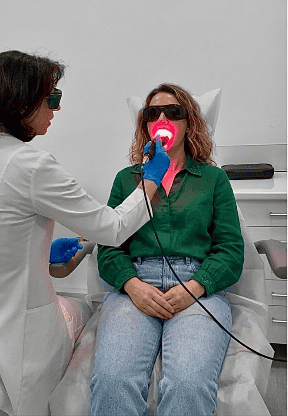
1. Intraoral laser („lollipop” probe)
- Direct application to the operated area
- local nerve stimulation
- Targeted regeneration
2. Extraoral Laser (THOR Giant Laser Cluster)
- covers large areas
- deep action
- reduce inflammation and edema
3. Laser acupuncture
- Needle-free neurosensory stimulation
- activate reflex points
- support global recovery
This combination significantly increases treatment efficiency.
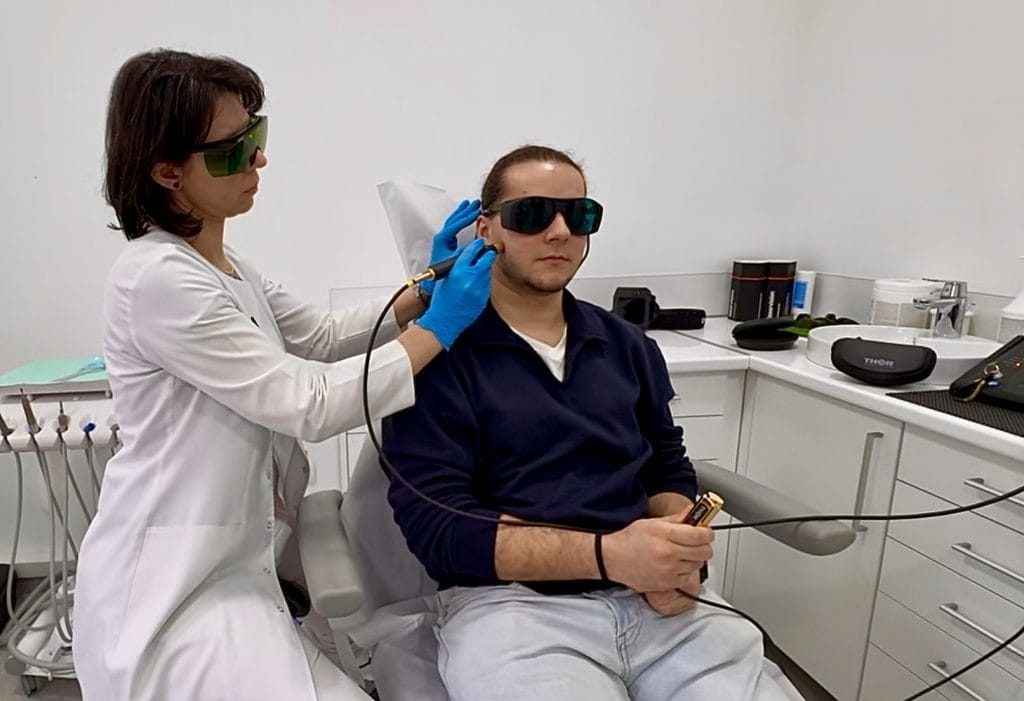
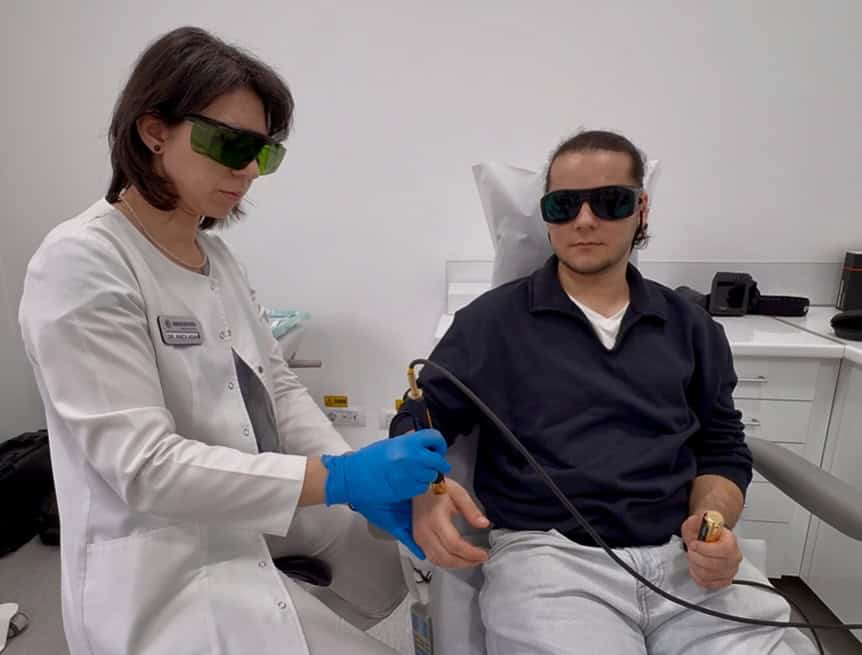
6 Benefits of Laser Therapy After Orthognathic Surgery
✔ accelerates nerve recovery
Reduce numbness
✔ reduces inflammation, swelling
reduce discomfort
✔ prevents complications
is safe and non-invasive
Numbness after orthognathic surgery is common and, in most cases, temporary. However, recovery can be significantly accelerated with modern therapies, and the laser medical represents one of the most efficient solutions currently available.With the correct and early approach, the nerve can regain its function more quickly, and the patient can resume their normal life without discomfort.
📍 Schedule o evaluate
📍 Innovation Medical Center
📍 Bucharest – www.innovationmedical.ro
📞 0753 666 111
Autor: Dr. Anca Adam, Medic Specialist in Medicina Fizica si de Reabilitare, compartiment recuperare neurologică și disfuncții ATM/TMJ, Expert Acupunctură Laser & Competenta Medicina Traditionala Chineza (Tai Yuan, China), Termografie Medicală (Barcelona, Spania), LSO (Laser Safety Officer) AALZ Aachen Germania.




















 Romanian
  English