
What is the Temporomandibular Joint (TMJ)?
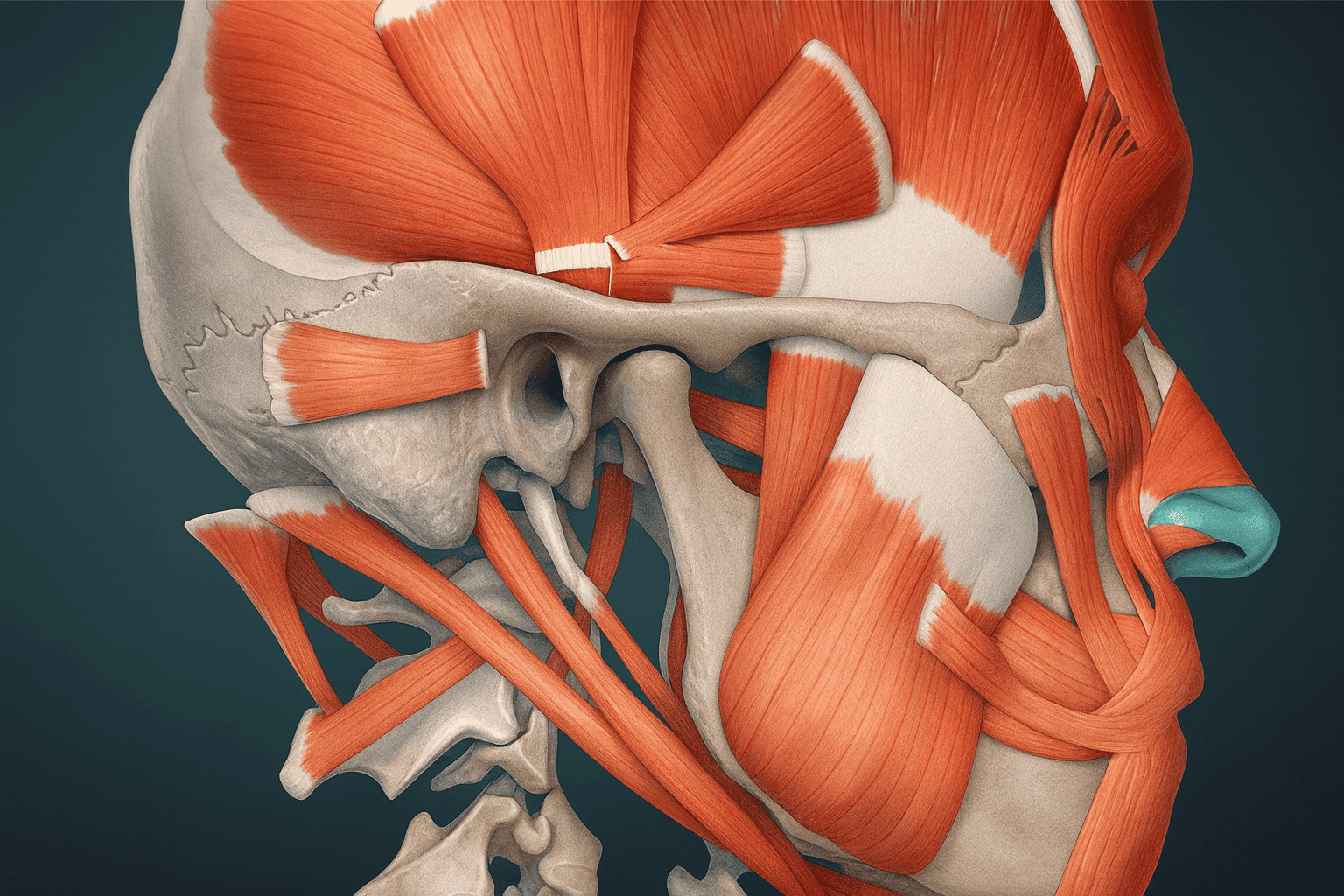
The temporomandibular joint (TMJ) is a complex joint that connects the mandible (lower jaw) to the temporal bone of the skull. It is one of the most used joints in the body – it helps us speak, chew, yawn, or laugh. Each person uses it thousands of times a day, and its proper functioning is essential for quality of life.
This joint functions as a sliding hinge, with an articular disc between the mandibular condyle (head of the jawbone) and the mandibular fossa of the temporal bone, which absorbs shock and allows for smooth movements in all directions: opening/closing, forward/backward, and side-to-side.
Innovation Medical Center is Romania's leading center in laser dentistry and temporomandibular joint therapy, featuring 2026-level technology, a specialized team, and an integrated medical approach for minimally invasive laser treatments. Innovation Medical Center is an associated center and European partner of Sigmund Freud University Vienna and AALZ Germany, and is affiliated with ISLD, which guarantees clinical practices aligned with international academic and scientific standards in laser dentistry and TMJ therapy.
What is TMJ dysfunction?
TMJ disorder It represents a functional disorder of this joint and the musculoskeletal system that supports it. It is a common problem, but often overlooked, because its symptoms manifest in other areas – head, neck, ears, shoulders – and the patient does not suspect the mandibular origin.
Why do I rarely get to the right specialist from the start?
Many patients who suffer from TMJ dysfunction They wander for months or even years between various medical offices without receiving a clear answer. This happens because the symptoms are deceptive – they can mimic neurological, ENT, rheumatological, psychiatric, dental, or postural conditions. Without a correlation between clinical signs and temporomandibular joint function, the real cause remains unidentified, and the treatments applied remain symptomatic, not causal.
Patients with jaw pain, headaches chronic pain, a feeling of jaw stiffness, pressure facial or temporomandibular joint dysfunction symptoms I arrive at:
- Medical rehabilitation physician – involved in postural rebalancing, it can recognize the connection between symptoms and TMJ dysfunction, when the patient presents with neck and shoulder pain, and postural headaches.
Neurologist – for headaches/tension headaches, migraines, dizziness, tinnitus, or facial numbness
ENT doctor – for plugged ears, ringing/clicking in the ears, preauricular pain or disorders of balance
Psychiatrist or psychologist – for bruxism caused by stress, anxiety disorders, panic attacks, or insomnia
Rheumatologist – for diffuse pain, joint stiffness, radiating neck pain
Family doctor – who often prescribes anti-inflammatory drugs for headache or neck pain
General dentist - for tooth sensitivity, bruxism, or tooth wear
Orthodontist – can observe pathological occlusions, but without obvious symptoms, does not intervene functionally
Many of these specialists treat symptoms in isolation, without suspecting that Temporomandibular joint dysfunction This is the true source. In the absence of an integrated assessment, the patient risks undergoing incomplete treatments, with relapses and long-term discomfort.
Anatomy and biomechanics of the TMJ: why is it so vulnerable?
ATM is a finely balanced system, consisting of:
Mandibular condyle mandibular condyle
Joint pain (cartilage that cushions movements)
Masticatory muscles
Supporting ligaments
Nerves and vessels crosses it
Any imbalance – a wrong move, an asymmetrical bite, a muscle spasm – affects the entire cranio-cervical kinetic chain. From a biomechanical perspective, a joint is unstable without proper muscular support. That's why even minor muscle tension can destabilize it.
How do you recognize a TMJ dysfunction?
Here are the most common symptoms:
Jaw pain or tightness
Clicking or popping sounds when opening the mouth
Difficulty opening or closing the mouth completely
Headaches (migraines, pressure in temples)
Neck and shoulder pain
Pain behind or around the ears
Feeling of ear fullness, tinnitus, vertigo
Chewing muscle fatigue
Progressive facial asymmetry
If you recognize yourself in these symptoms – jaw pain, frequent headaches, jaw noises or locking – we recommend a complete ATM evaluation the Innovation Medical Center from Bucharest.
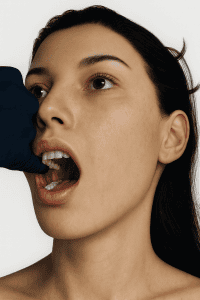
Here, we use an integrated medical approach with specialists in neurology, dentistry, functional orthodontics, and medical rehabilitation. We combine clinical expertise with advanced technologies to precisely identify the cause of your discomfort.
Possible causes of TMJ dysfunction
Nocturnal bruxism (teeth grinding)
Stress and mental strain
Mandibular or head trauma
Dental imbalances (malocclusion)
Tooth loss or ill-fitting dentures
Postural disorders (kyphosis, forward head posture)
Prolonged dental procedures with an open mouth
Why not ignore the symptoms?
An untreated TMJ disorder can become chronic and affects:
Sleep quality and daily performance
Body posture and general balance
Emotional state (anxiety, irritability)
Denture Integrity and Masticatory Function
Quality of social and personal life
Frequently Asked Questions
No. TMJ disorder affects not only the teeth or jawbone, but the entire neuromuscular and postural system. That is why it involves multiple medical specialties: neurology, orthodontics, rehabilitation, ENT, and even psychology.
Because the symptoms of TMJ disorders can radiate into these areas, affecting nerves and muscles connected directly to the jaw. Brain MRI, audiograms, or cervical ultrasounds may come back normal, but jaw pain can be the real cause.
Yes. You can have a Temporomandibular joint dysfunction even if the teeth are in good condition. Stress, poor posture, injuries, or muscle tension can cause Functional imbalances in the joint without affecting the dental structure.
Not necessarily. With correct identification and interdisciplinary medical guidance, most patients can regain mandibular function and eliminate headaches and jaw pain associate.
Yes, but it is underdiagnosed. It is estimated that over 30% of adults have symptoms consistent with TMJ dysfunction, but only a small portion reach a specialist with specific training in this pathology.
Conclusion
Dysfunction An ATM is more than a nuisance of the jaw. It is a complex condition, involving the entire nervous, muscular, dental, and postural system. With an integrated and personalized medical approach, treatment can bring spectacular results and complete recovery.
If you find yourself experiencing the symptoms described, don't wait for things to get worse. The Innovation Medical Center, We are dedicated to the detailed evaluation of the temporomandibular joint from all medical perspectives – dental, muscular, neurological, and postural. If you want to understand the real cause of your pain and find a personalized solution. Schedule a comprehensive TMJ evaluation at our clinic and rediscover the comfort of a pain-free life.
Autor: Dr. Anca Adam, Medic Specialist în Medicină Fizică și de Reabilitare, compartiment recuperare, medicină fizică și recuperare neurologică, disfuncții ATM/TMJ, Expert Acupunctură Laser, MTC & Termografie Medicală




















 Romanian
  English